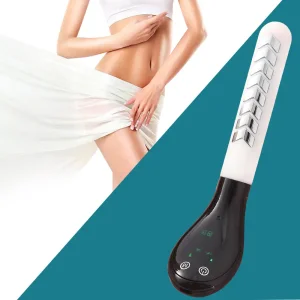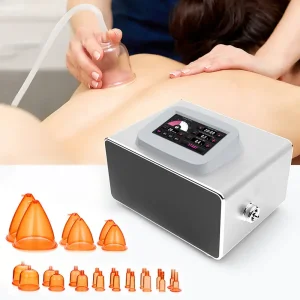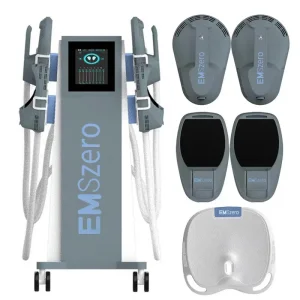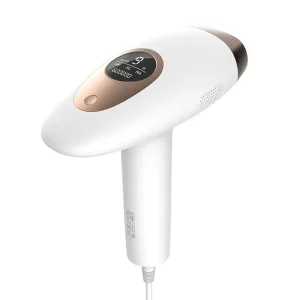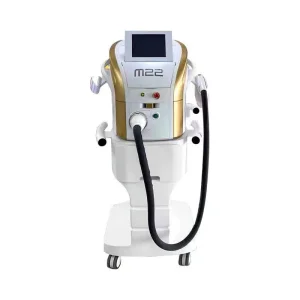
Featured Commercial PDT & LED Equipment Systems
Direct factory export inventory featuring precision spectrum arrays, multi-wavelength photon delivery, and clinical aesthetic configurations.
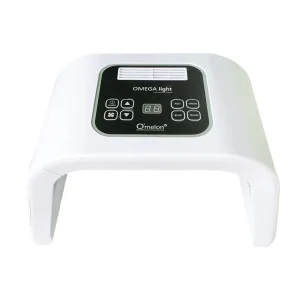
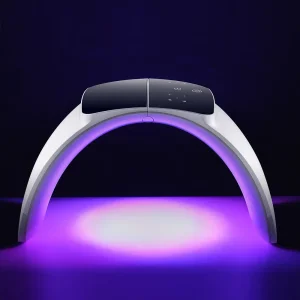

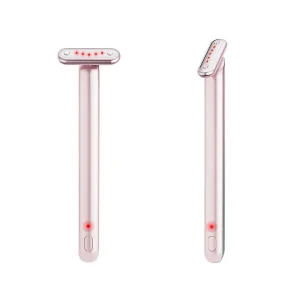
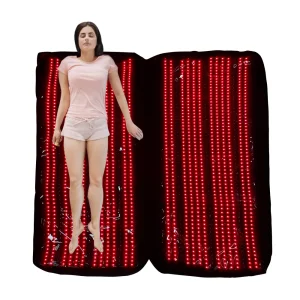

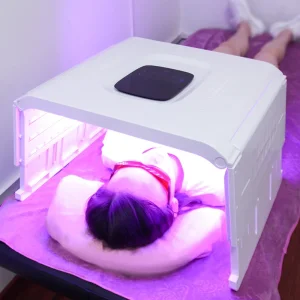
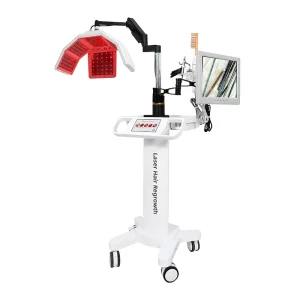
1. Executive Overview & The Photobiomodulation (PBM) Paradigm
The global market for medical-grade and commercial Photodynamic Therapy (PDT) LED machines has entered a period of rapid technological maturation. Driven by cellular biophysics research and advanced semiconductor manufacturing, light therapy has evolved from a secondary aesthetic accessory into a core clinical modality for non-invasive dermatological repair, oncological adjunctive therapy, and anti-aging cell modulation.
At the core of Photodynamic Therapy is the mechanism of Photobiomodulation (PBM). Unlike thermal energy treatments such as fractional CO2 lasers or high-intensity focused ultrasound (HIFU) that rely on localized micro-thermal tissue damage to trigger a healing response, PDT operates strictly via non-thermal photon absorption. Specific wavelengths of visible light and near-infrared (NIR) spectra target intracellular chromophores—most notably Cytochrome c Oxidase (CCO) within the mitochondrial respiratory chain.
For B2B procurement professionals, aesthetic clinic directors, and regional equipment distributors, evaluating a PDT LED therapy machine exporter requires a deep understanding of these spectral interactions. Machine efficacy relies not simply on visible color output, but on precise spectral purity (narrow full-width at half-maximum, or FWHM bandwidths), calibrated irradiance ($mW/cm^2$), and sustained optical energy output without thermal drop-off.
Modern PDT systems manufactured in specialized production hubs integrate multi-band light-emitting diodes (SMD and COB packages) capable of emitting focused wavelengths: 415nm (blue porphyrin excitation for Cutibacterium acnes suppression), 590nm (yellow lymphatic stimulation), 630nm (red fibroblast proliferation), and 830nm (near-infrared deep muscular and dermal collagen restructuring).
2. Global Market Dynamics & Enterprise Sourcing Intent
The international trade of aesthetic hardware reveals shifting procurement priorities across North America, the European Union, the Middle East, and the Asia-Pacific region. Institutional buyers are moving away from unbranded, low-irradiance novelty LED masks toward industrial-grade PDT light arrays equipped with intelligent cooling systems, customizable protocol software, and verified spectral bandwidth output.
When analyzing search intent for queries surrounding PDT Led Therapy Machine Exporter & Factories, enterprise buyers consistently evaluate three primary procurement vectors:
- Optical Reliability & Radiometric Density: Whether the factory provides certified Integrating Sphere photometer test reports showing true $mW/cm^2$ output at clinical treatment distances (10cm – 30cm).
- Thermal & Driver Architectural Stability: Photobiomodulation performance decays rapidly if LED die junction temperatures exceed operational limits. Industrial buyers scrutinize internal copper-clad board substrates and heat-sink dissipation capacity.
- Unit Level Cost-to-Performance Ratios: Establishing factory-direct relationships with Tier-1 Chinese manufacturers allows buyers to eliminate middleman margins while obtaining premium hardware specifications.
3. China Industry 4.0: Supply Chain Resilience & Manufacturing Edge
The concentration of optoelectronic innovation in Guangdong, China—specifically the Shenzhen aesthetic hardware manufacturing corridor—has restructured global supply dynamics. China's Industry 4.0 integration provides distinct advantages for global importers seeking certified PDT therapy machines.
Optoelectronic Ecosystem Integration
The physical proximity of semiconductor packaging plants, high-precision Surface Mount Technology (SMT) lines, custom acrylic/aluminum casing mold fabricators, and medical-grade power supply manufacturers creates an unmatched manufacturing turnaround capability. Engineering changes that take months in other markets are executed in days.
High-Precision SMT & Automated Optical Inspection (AOI)
Leading factories deploy multi-axis SMT pick-and-place robotics capable of mounting thousands of micro-LED dies per hour onto high-conductivity metal-core printed circuit boards (MCPCBs). Automated Optical Inspection (AOI) systems instantly detect soldering anomalies, die misalignment, or spectral flux variance prior to final assembly.
| Manufacturing Parameter | Standard Commercial Assembly | China 4.0 Industrial Export Standard |
|---|---|---|
| Circuit Substrate | Standard FR-4 Fiberglass | Aluminum-Core Metal PCB (MCPCB) |
| Spectral Wavelength Binning | ±15nm (Broad Spectral Drift) | ±3nm (Narrow Bandwidth Medical Binning) |
| Thermal Management | Passive Air / Plastic Heat Sink | Active Fin Fans + Anodized Aluminum Heatsinks |
| Power Supply Integration | Unregulated Voltage Switching Drivers | Constant-Current Medical Grade Drivers (EN 60601-1) |
| Degradation Rate (5,000 Hours) | > 25% Radiometric Power Loss | < 5% Radiometric Power Loss (L70 Rated) |
Through rigid supply chain governance and end-to-end quality assurance (encompassing incoming component screening, burn-in aging tests of 48+ hours, and radiometric sphere calibration), China’s leading exporters deliver commercial-grade equipment at price points that yield high ROI for international buyers.
4. Technical Architecture: Spectrometry & Light Delivery Engineering
Understanding the engineering underpinnings of professional PDT LED devices enables procurement managers to differentiate between basic lighting fixtures and clinical photobiomodulation platforms.
1. Wavelength Optimization & Chromophore Targeting
The therapeutic window of skin spans roughly from 400nm to 1000nm. Within this spectrum, specific target chromophores absorb light energy selectively:
- Blue Spectrum (415nm ± 5nm): Reacts with endogenous porphyrins produced by C. acnes, generating singlet oxygen molecules ($^1O_2$) that eradicate bacterial cells without damaging adjacent skin structures.
- Yellow Spectrum (590nm ± 5nm): Penetrates into the upper dermal plexus, stimulating microvascular flow, promoting lymphatic drainage, and attenuating post-procedure erythema.
- Red Spectrum (630nm – 660nm): Targets dermal fibroblasts, accelerating collagenase regulation, enhancing ATP production, and upregulating micro-RNA pathways responsible for structural protein synthesis.
- Near-Infrared Spectrum (830nm – 850nm): Exhibits deep photon scattering, reaching subcutaneous adipose layers, deep fascia, and joint capsules to suppress inflammatory cytokines (TNF-α, IL-6).
2. Optical Physics: Irradiance vs. Total Energy Density (Fluence)
A critical metric overlooked in non-technical sourcing is the distinction between Irradiance and Fluence:
$$\text{Fluence (Joules/cm}^2\text{)} = \text{Irradiance (Watts/cm}^2\text{)} \times \text{Time (Seconds)}$$
If an LED panel outputs insufficient irradiance (e.g., $5 mW/cm^2$), treating a patient to reach a therapeutic fluence of $30 J/cm^2$ would require an impractical 100-minute session. Professional factory designs aim for an optical density of $40 - 100 mW/cm^2$ at working distances, completing treatments in effective 15-to-20-minute windows.
3. Beam Angle & Lens Optics
Bare LED chips typically radiate light at a wide $120^\circ$ viewing angle, causing rapid photon dissipation in ambient air. Engineering-focused PDT factories integrate optical refractive lenses over each chip (typically $30^\circ$ or $60^\circ$ primary optical lenses) to focus light vectors, increasing photon density reaching the target skin surface.
5. Localized Application Scenarios Across Commercial Sectors
PDT LED machines serve diverse commercial, clinical, and home-care settings. Exporters must configure equipment features based on the operational requirements of each environment.
Whether supplying high-end plastic surgery suites in Beverly Hills or high-turnover day spas in Dubai, factory customization options—such as language localized UI screens, quick-swap lamp heads, and integrated thermal sensors—ensure seamless operational adoption.
6. Enterprise Buyer Guide: Evaluating Exporters & Factories
Selecting the right OEM/ODM manufacturing partner in China requires systematic supplier auditing. B2B procurement managers should evaluate potential factories across four key capability dimensions:
- Optical Test Capabilities: Does the supplier own an in-house spectral analysis lab equipped with calibrated integrating spheres, spectroradiometers, and thermal imaging cameras?
- Quality Management Certifications: Is the facility ISO 13485 certified for medical device manufacturing, rather than operating under a standard ISO 9001 commercial registration?
- Customization Depth (OEM/ODM): Can the engineering team handle custom PCB layout alterations, chassis redesigns, private-label branding, and software firmware modifications?
- Supply Chain Transparency & Warranty Architecture: Are critical components (such as LED dies and power supplies) traceable to reputable manufacturers (e.g., Epistar, Cree, Mean Well)? What are the exact terms for warranty part replacements and technical support?
Frequently Asked Questions (B2B Sourcing & Technical FAQ)
Expert insights addressing key procurement, engineering, and clinical operational queries for wholesale buyers.
Explore Additional Export Machinery & OEM Systems
Complete your aesthetic equipment catalog with specialized phototherapy, body shaping, and intimate wellness solutions available directly from factory lines.