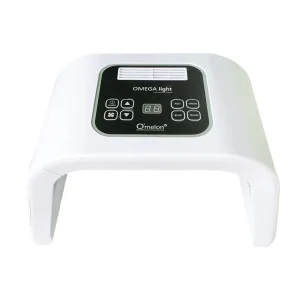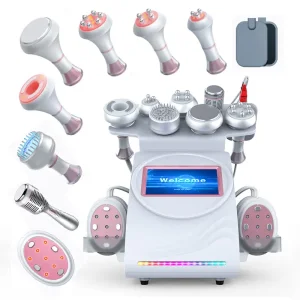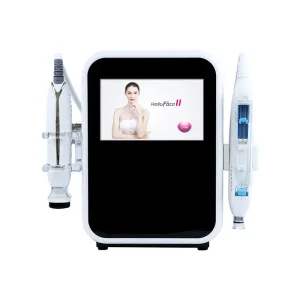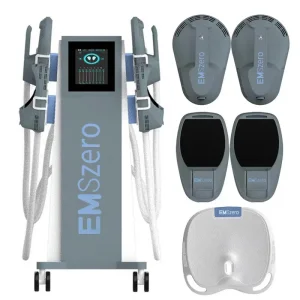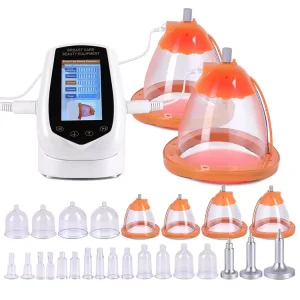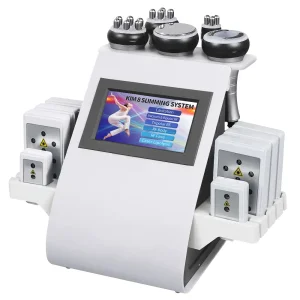
Featured OEM/ODM Salon & Medical Aesthetic Systems (Top Selection)
High-precision skin analyzers, hydrodermabrasion platforms, body contouring systems, and laser modules built for global distributors and beauty salon chains.
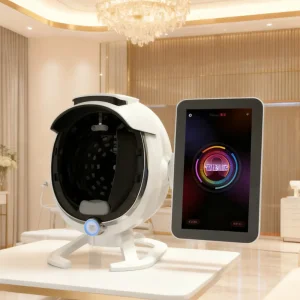
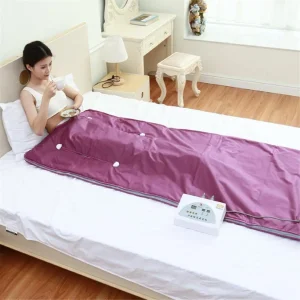
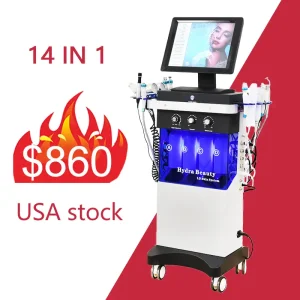
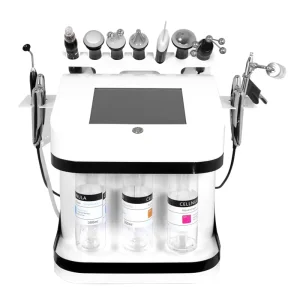
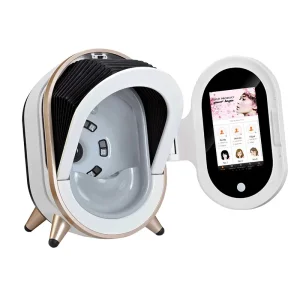
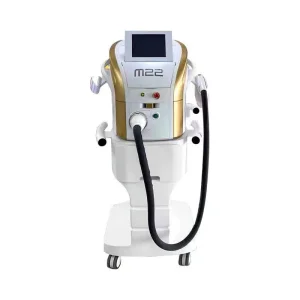
Executive Summary: The Evolution of OEM Skin Care & Salon Equipment Manufacturing
Analyzing market shifts from traditional standalone beauty devices to integrated multi-modality platforms, IoT-enabled diagnostic systems, and custom private-label solutions.
Information Gain Insight: Modern professional aesthetic buyers no longer evaluate OEM manufacturers purely on unit cost. The modern decision framework prioritizes engineering modularity, medical-grade compliance documentation (MDR/FDA 510k compatibility), optical/RF pulse precision, embedded AI diagnostics, and total cost of ownership (TCO) across device lifecycles.
The global market for professional beauty salon equipment and medical aesthetic machinery is undergoing a structural transformation. Driven by consumer demand for non-invasive treatments with minimal downtime, beauty salon chains, medspas, and aesthetic clinics are seeking high-performance equipment that guarantees consistent clinical efficacy, safety, and operational efficiency. For B2B importers, brand owners, and regional distributors, identifying qualified OEM skin care beauty salon factories & manufacturers is the cornerstone of building a resilient, high-margin product portfolio.
Historically, the professional skin care machinery sector was divided into isolated categories: basic hydra-dermabrasion units, simple mono-polar radiofrequency (RF) systems, and standard optical hair removal devices. Today, technological convergence has elevated industry standards. Modern beauty salon hardware integrates multi-spectrum skin diagnostics, high-intensity focused ultrasound (HIFU), electromagnetic muscle stimulation (HI-EMT/EMS), micro-current nano-mesotherapy, and diode laser technologies into modular, software-controlled chassis.
When procuring from China's premier aesthetic manufacturing hubs—specifically Shenzhen and Guangdong province—global buyers gain access to an unparalleled industrial ecosystem. However, navigating this landscape requires a deep understanding of manufacturing capabilities, quality assurance protocols, supply chain logistics, and international regulatory frameworks. This white paper serves as an authoritative guide for B2B stakeholders navigating OEM/ODM aesthetic device procurement.
China's Aesthetic Manufacturing Advantage: Shenzhen & Guangdong Hardware Ecosystem
Why leading global aesthetic brands leverage China's advanced electronics cluster for OEM/ODM engineering and mass manufacturing.
Concentrated Component Supply
Shenzhen's industrial ecosystem enables rapid sourcing of medical-grade SMT mainboards, precision peristaltic pumps, high-voltage RF capacitors, and German/Japanese optical diodes with zero supply chain lag.
Rapid Prototyping & Tooling
In-house industrial design, 3D mold prototyping, and CNC aluminum machining reduce new device launch timelines from 12 months down to 45–60 days for complex ODM projects.
Cost-Efficiency & Scale
High-volume automated assembly lines and localized component manufacturing deliver superior price-to-performance ratios without sacrificing component reliability or chassis finish quality.
Engineering Precision & In-House Manufacturing Capabilities
A true OEM manufacturing partner maintains end-to-end control over the production lifecycle. In aesthetic machinery manufacturing, sub-standard wiring, uncalibrated energy outputs, or poor heat dissipation can result in device failure or adverse clinical events. Top-tier Chinese factories utilize rigorous engineering workflows:
- PCB Circuitry & Firmware Customization: Advanced surface-mount technology (SMT) cleanrooms produce proprietary mainboards with intelligent temperature sensors, over-current protection, and custom user interface (UI) software support.
- Optical & Laser Assembly: Cleanroom environments dedicated to aligning 808nm/755nm/1064nm diode lasers, intense pulsed light (IPL) filter blocks, and multi-spectral AI camera lenses to guarantee optical energy density (fluence) accuracy.
- Fluid Dynamics for Hydra-Dermabrasion: Engineered vacuum pumps, anti-clogging fluid loops, and precision micro-bubbling generators that ensure consistent exfoliation and solution infusion without pressure loss.
- Thermal Management: Integration of TEC (Thermoelectric Cooling) peltier modules, copper radiators, and silent Japanese cooling fans to maintain continuous operational cooling during heavy salon usage.
Global Procurement Needs: OEM vs. ODM Customization Matrix
Structuring private-label programs to meet target market positioning, compliance requirements, and business ROI goals.
| Specification Parameter | Standard OEM (Private Label) | Advanced ODM (Custom Engineering) | Clinical / Enterprise Grade |
|---|---|---|---|
| Branding & Exterior | Silk-screen Logo, Custom Casing Colors | Exclusive Chassis Design, Custom Molds | Ergonomic Medical Trolley & Housing |
| UI & Software | Multi-language GUI, Logo Boot Screen | Custom Android/Linux OS, IoT Telemetry | Client CRM Data Storage & Cloud Sync |
| Hardware Customization | Standard Probe Handles & Optics | Custom Handpiece Ergonomics & Wavelengths | Multi-Generator Modular Stacks |
| Target Buyer Profile | Regional Beauty Distributors, Franchise Salons | Established Aesthetic Brands, Chain Spas | Medical Clinics, Dermatologists, Hospitals |
| MOQ & Lead Time | 1–5 Units | 7–14 Days Lead Time | 20–50 Units | 30–60 Days Lead Time | Custom Contract Basis | 45+ Days |
For Salon & Spa Chain Buyers
Chain operators prioritize operational simplicity, operator safety, low maintenance overhead, and rapid client throughput. Multi-functional platforms—such as 14-in-1 hydra beauty stations or 4-handle EMS body sculpting machines—allow salons to offer diverse treatment menus from a single footprint, maximizing treatment room ROI.
For Aesthetic Brand Distributors
Distributors require brand differentiation, strong warranty backing, localized spare parts inventory, and clear marketing collateral. Partnering with a manufacturer capable of delivering custom-branded packaging, distinct outer casings, and certified safety documentation provides a defensible competitive moat in competitive markets.
Compliance, International Regulatory Standards & Localized After-Sales Support
Navigating global certification barriers to guarantee smooth customs clearance, operational safety, and continuous device uptime.
CE (LVD & EMC)
Essential electrical safety compliance (Low Voltage Directive) and Electromagnetic Compatibility testing to ensure non-interference with other salon equipment across the European Economic Area.
ISO 13485 QMS
International quality management system standard for medical devices, certifying that the manufacturing facility adheres to strict traceability, risk management, and process control.
RoHS & Environmental
Restriction of Hazardous Substances compliance guaranteeing that device components are free from lead, mercury, cadmium, and hazardous flame retardants.
Localized Warranty & Parts
Comprehensive 1-to-3 year hardware warranties backed by modular spare part replacement kits, video technical guidance, and rapid international air freight logistics for components.
Technical Assurance Note: Qualified OEMs implement rigorous 72-hour continuous aging tests, high-voltage flash tests, and acoustic ultrasound power calibration before factory dispatch to reduce Dead-on-Arrival (DOA) rates to under 0.1%.
Industry Trends: 2025–2030 Technological Roadmap for Aesthetic Hardware
Key technological innovations shaping the next decade of professional skin care and body contouring devices.
1. AI-Driven Multispectral Diagnostics Integration
Skin analysis is transitioning from basic magnified imaging to deep-learning spectral mapping. Modern diagnostic devices utilize RGB, UV, and PL polarized light alongside AI neural networks to quantify sub-surface pigmentation, vascular dilation, pore density, and sebum moisture levels in real time. Integration of these analyzers directly into treatment platforms enables automated treatment parameter selection.
2. Hybrid Multi-Technology Platforms
Single-function devices are being rapidly replaced by hybrid stations. Combining monopolar/bipolar Radiofrequency (RF), 40K/80K Ultrasonic Cavitation, Vacuum Lymphatic Drainage, and EMS Muscle Stimulation into unified workstations optimizes clinical outcomes, reduces cabinet footprint in salons, and maximizes client lifetime value (LTV).
3. Cloud Telemetry & Smart Fleet Management
Enterprise OEM devices now feature integrated Wi-Fi/4G IoT modules. Salon chain owners and device franchisors can remotely monitor shot counts on laser handpieces, track treatment module utilization rates, push over-the-air (OTA) firmware updates, and perform predictive diagnostic maintenance before hardware failures occur.
4. Non-Invasive Muscle Sculpting & Pelvic Health
High-Intensity Focused Electromagnetic (HI-EMT) technology combined with synchronized RF energy represents the fastest-growing segment in non-invasive body sculpting. Furthermore, expanding applications into pelvic floor rehabilitation chairs and intimate wellness devices offers high-revenue expansion opportunities for aesthetic clinics.
Localized Application Scenarios & Revenue Architecture
Deploying specialized aesthetic machinery across diverse commercial operational models.
Commercial Beauty Salons & Day Spas
Primary Need: High aesthetic appeal, silent operation, multi-step facial treatments.
Recommended Stack: 14-in-1 Hydra Dermabrasion Stations, 7-Color LED PDT Photon Canopies, Oxygen Facial Infusion Systems.
Revenue Driver: Recurring monthly facial subscription packages and express anti-aging protocols.
Medical Aesthetic Clinics & MedSpas
Primary Need: High power output, precise clinical documentation, repeatable results.
Recommended Stack: 3D AI Multispectral Skin Analyzers, Diode Laser Hair Removal (808nm/755nm/1064nm), Fractional Micro-Needling RF.
Revenue Driver: Premium medical-grade skin remodeling and laser hair removal course packages.
Wellness Centers & Slimming Studios
Primary Need: Hands-free operation, body contouring, muscle building.
Recommended Stack: 4-Handle EMS Body Sculpting with RF, 80K Ultrasonic Cavitation Lipo Laser, Infrared Sauna Detox Blankets.
Revenue Driver: High-ticket body shaping, post-partum restoration, and lymphatic drainage packages.
Frequently Asked Questions: B2B Procurement & Engineering
Detailed answers to critical technical, manufacturing, and operational questions for global OEM buyers.
What is the typical Minimum Order Quantity (MOQ) for custom OEM skin care beauty equipment?
How does the factory guarantee energy stability and safety across RF and Cavitation devices?
Can the software GUI and user interface be customized for localized international markets?
What is the lead time from OEM contract signing to final door-to-door delivery?
How are warranty claims, spare parts support, and technical repairs handled overseas?
What international certifications are provided to clear customs and comply with local health regulations?
Complete OEM/ODM Product Catalog (Extended Selection)
Explore additional certified salon equipment, advanced body shaping platforms, and mesotherapy devices direct from our Shenzhen manufacturing plant.