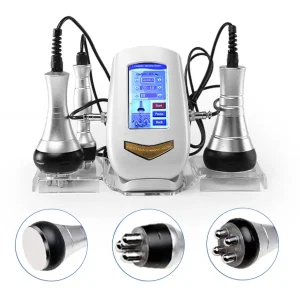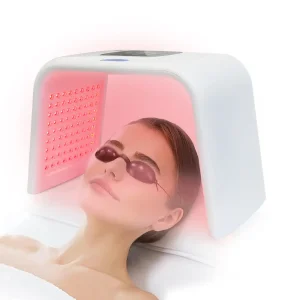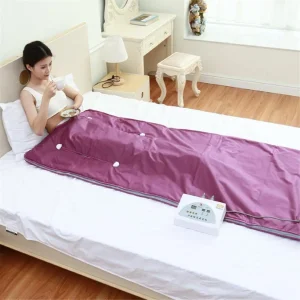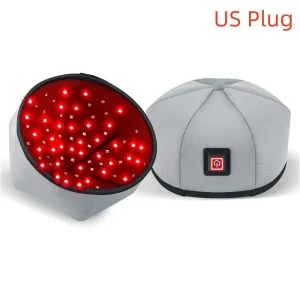
Featured OEM Aesthetic & Light Therapy Systems
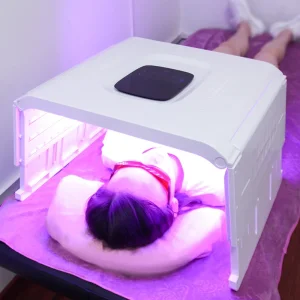
The Photobiomodulation (PBM) Industrial Paradigm Shift
How advanced semiconductor optics, spectral narrowing, and precise fluence control are defining the next decade of commercial LED red light manufacturing.
Cellular Photochemistry & Optical Dosimetry
The global photobiomodulation (PBM) market has evolved from consumer-grade novelty light panels to highly controlled, clinically validated bio-energetic platforms. As an established OEM LED red light supplier and manufacturer, our technical framework centers on stimulating Cytochrome c Oxidase (CCO) within the mitochondrial respiratory chain.
When target tissue absorbs photons in the red spectrum (specifically 630nm to 660nm) and near-infrared spectrum (810nm, 830nm, to 850nm), nitric oxide (NO) is photodissociated from CCO. This enzymatic release increases electron transport velocity, elevates adenosine triphosphate (ATP) synthesis, reduces systemic oxidative stress, and triggers localized cellular regeneration.
The "Optical Window" & Spectral Narrowness
Effective therapeutic outcomes rely on operating precisely within the biological optical window (600nm – 1100nm), where light absorption by skin chromophores (hemoglobin, melanin, and water) is minimized, allowing deeper photons to penetrate dermal and sub-dermal target tissues.
Commercial white-label equipment often fails due to broad spectral distribution (high full-width at half-maximum, or FWHM). OEM manufacturing processes require narrow-band LED chips with tolerances constrained to ±3nm. This eliminates wasteful heat dissipation while maximizing photochemical power delivery per Joule of energy input.
Information Gain Insight: Irradiance alone does not guarantee therapeutic success. Optimal LED red light engineering balances Power Density (mW/cm²), Energy Density (Fluence in J/cm²), Beam Divergence Angle (30° vs. 60°), and Thermal Stability to avoid target tissue overheating while maintaining peak CCO activation.
Global Procurement Dynamics for LED Red Light Hardware
Navigating technical specifications, component sourcing, minimum order quantities (MOQ), and industrial scaling for global enterprise buyers.
Medical & Aesthetic Spa Chains
High-volume clinical environments demand continuous-duty optical systems capable of operating 12+ hours daily without power decay. Global spa chains prioritize modular LED driver boards, active heat-pipe thermal dissipation, low noise emissions (<40dB), and multi-preset touchscreen GUIs for rapid practitioner delegation.
D2C & Omnichannel Brands
Consumer wellness brands require customized exterior tooling, premium matte/metallic surface finishes, custom packaging, intuitive companion smartphone app integration (Bluetooth 5.2/Wi-Fi), and strict compliance with international electromagnetic safety (EMC/EMF) protocols to protect brand equity.
Rehabilitation & Athletic Clinics
Sports science and physical therapy facilities require multi-wavelength, full-body light beds and flexible targeted pads. Procurement specifications demand dual-chip SMDs, high target power density (>180mW/cm² at surface), frequency pulsing capabilities (10Hz – 10,000Hz), and heavy-duty structural steel frames.
Component Selection Matrix: Consumer vs. OEM Medical-Grade
| Engineering Parameters | Consumer Standard (Low-End White Label) | Aidiesin Professional OEM Standard |
|---|---|---|
| LED Chip Architecture | Generic Epistar Single-Chip (Broad Wave) | High-Efficiency Dual/Triple-Chip (OSRAM/CREE Array) |
| Wavelength Tolerance | ±15nm to ±20nm (High Variance) | Ultra-Narrow ±2nm to ±3nm Binning |
| Irradiance Calibration | Calculated theoretically via power draw | NIST-Traceable Spectroradiometer Calibrated |
| Thermal Dissipation | Basic aluminum PCB, high thermal decay | Copper-Substrate Metal Core PCB + Active Fans |
| Electromagnetic Field (EMF) | 0.3 – 1.5 µT at 6 inches distance | 0.00 µT Shielded Internal Power Architecture |
| Power Driver Lifespan | 10,000 Hours (Mean Time Between Failures) | Mean Well Class II Medical Grade Drivers (50,000+ Hrs) |
Macro Sector Solutions & Custom Manufacturing Options
From full-body photobiomodulation pods to ultra-flexible wearable silicone arrays, engineered to meet precise clinical applications.
1. Professional Full-Body PBM Pods & Light Beds
Engineered for high-end wellness resorts, recovery lounges, and anti-aging centers. Our full-body light bed platforms feature up to 40,000 individual high-power SMD LEDs configured across custom spectral combinations (630nm, 660nm, 810nm, 830nm, 850nm, plus optional 940nm near-infrared).
- Integrated 360-degree uniform irradiance coverage without optical blind spots.
- Variable pulse rate control (1Hz to 20,000Hz) for neural and deep-tissue targeting.
- Intelligent cooling channels maintaining chip temperature below 55°C for maximum spectral stability.
- Custom exterior gel-coat colors, internal acoustic sound systems, and automated lift doors.
2. Targeted Dermal & Clinical Panel Arrays
Modular vertical panels engineered for clinical skin rejuvenation, post-surgical recovery, and dermatology practice integration. Available in multi-panel daisy-chain configurations driven by a single master touchscreen console.
- Custom secondary optical lenses (30° narrow angle for deep penetration, 60° for wide surface spread).
- Zero-flicker constant-current drivers preventing eye fatigue during lengthy therapy sessions.
- Floor stand options including motor-driven height adjustment and horizontal boom arms.
- Custom branding: CNC-engraved aluminum logos, custom metal anodization, and branded startup screens.
3. Wearable Flexible Silicone Masks & Joint Wraps
For private label skincare brands and direct-to-consumer enterprises, flexible medical-grade silicone devices offer maximum contact irradiance with high portability.
- Food-grade, non-toxic liquid silicone rubber (LSR) molding for biocompatibility.
- Integrated micro-LED chips with soft polymer encasing to allow 100% skin contact.
- Rechargeable lithium-ion smart controller batteries with custom USB-C fast charging profiles.
- Custom silicone dye color matching, silk-screened logos, and customized EVA travel cases.
4. Hair Regrowth & Cranial Photobiomodulation
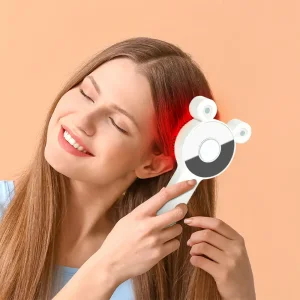
Targeted scalp treatment systems incorporating low-level laser diodes (LLLT) and high-density red LEDs (650nm / 670nm) designed to reactivate dormant hair follicles.
- Ergonomic helmet and cap inserts with optimized diode distribution for full scalp coverage.
- Built-in smart sensors that automatically pause treatment if the device is removed.
- Dual-frequency micro-pulsing protocols to enhance scalp micro-circulation without heat buildup.
- Complete turnkey manufacturing: internal electronics, plastic shell tooling, and retail packaging.
International Certification, Quality Assurance & Compliance
Rigorous manufacturing standards, legal compliance frameworks, and global after-sales engineering support.
ISO 13485 Quality Management
Our production facilities operate under strict ISO 13485 medical device quality management systems. Every assembly stage—from SMT chip mounting to optical power testing—is tracked with complete component traceability.
IEC 62471 Photobiological Safety
All light emitting systems undergo rigorous testing for photobiological safety under IEC/EN 62471 standards to ensure zero retinal risk, eliminating harmful ultraviolet or blue light spillover in red light configurations.
Global Regulatory Approvals
We supply fully documented technical construction files (TCF) supporting CE MDR (EU), FDA 510(k) clearances, RoHS / REACH compliance, and FCC / ETL certifications for seamless customs clearance worldwide.
Comprehensive After-Sales & Localized Engineering Support: We provide our global B2B partners with modular spare parts kits, 24/7 technical hotline access, remote software diagnostic tools, comprehensive engineer repair training, and a standard 2-year warranty on all professional systems.
Technology Roadmap & Future Innovations
Pioneering the next generation of photobiomodulation through smart sensing, multi-wavelength integration, and biological feedback systems.
AI-Driven Dosimetry Guidance
Next-generation OEM platforms integrate real-time optical reflectance sensors that analyze patient skin tone, hydration, and tissue density to automatically dynamically adjust spectral irradiance and treatment exposure time in real time.
Pulsed Multi-Frequency Brainwave Entrainment
Moving beyond static output, advanced cranial devices utilize 10Hz Alpha and 40Hz Gamma frequency pulsing protocols targeting microglial activation and neuro-inflammation reduction for neurological wellness research.
Quad-Chip Micro-Lens Arrays
Our engineering team is deploying quad-chip Surface Mount Devices (SMDs) integrating 630nm, 660nm, 810nm, and 850nm into a single 3528 package under a unified micro-refractive glass lens for perfect spatial spectral mixing.
Frequently Asked Questions for B2B Sourcing
Clear, direct engineering and procurement answers for distributor networks, clinical procurement managers, and OEM project leaders.
What is the minimum order quantity (MOQ) for custom OEM red light therapy devices?
Our minimum order quantities (MOQs) depend on the level of customization required:
- Standard Chassis with Logo & Packaging Customization: MOQ starting at 20 – 50 units.
- Custom Housing Color & Custom Waveband Combinations: MOQ starting at 100 units.
- Complete Private Label Tooling (New Plastic/Metal Molds): MOQ generally starts at 500 units, depending on device dimensions and industrial complexity.
How do you verify optical irradiance and spectral output accuracy?
We do not rely on theoretical wattage calculations. Every production batch is measured using NIST-traceable spectroradiometers (such as the HAAS-2000 high-accuracy array spectrometer) and integrating spheres. We provide our B2B clients with certified test reports detailing spectral irradiance (mW/cm²), total radiant flux (W), central peak wavelength (nm), and FWHM bandwidth before shipment.
Can we request custom wavelength combinations outside 660nm and 850nm?
Yes. As a direct OEM manufacturer, we support fully tailored LED arrays. Common specialized options include 415nm (Blue for acne care), 520nm (Green for hyperpigmentation), 590nm (Yellow for lymph circulation), 810nm (Near-Infrared for deep brain/muscle penetration), and 940nm (Infrared for thermal/joint therapy). Arrays can be wired for independent wavelength control via touchscreens.
How does your factory ensure zero EMF (Electromagnetic Field) emissions?
Our engineering team utilizes customized aluminum grounding plates, shielded internal power supply cables, non-inductive power resistors, and isolated DC step-down transformers. This ensures magnetic flux density registers at 0.00 µT at standard treatment distances (3 to 6 inches), fully passing rigorous clinical safety inspections.
What is the average lead time for OEM sample prototyping and mass production?
Sample prototypes with basic logo printing and customized wavebands require approximately 7 to 12 working days. Full custom industrial design prototyping (3D printed samples + custom PCB layout) takes 15 to 25 days. Mass production lead time typically ranges between 25 and 35 days upon final sample sign-off and deposit confirmation.
How are warranty claims and technical repair parts handled internationally?
We design our light panels and systems with modular plug-and-play internal components (power drivers, LED boards, cooling fan blocks). Under our standard 2-year warranty, if a component experiences technical fault, we ship immediate replacement modules via express air freight alongside step-by-step video instructions for effortless field replacement.
Do your devices support custom software, mobile app, and touch GUI localization?
Yes. Our software engineering team provides complete user interface customization. We can integrate multi-language display menus (English, Spanish, German, French, Arabic, Japanese, etc.), custom brand boot screens, programmed treatment timers, preset intensity profiles, and custom Tuya or standalone iOS/Android app integration.
What thermal protection mechanisms are implemented to prevent LED degradation?
LED chip junction temperature directly impacts light efficiency and output lifespan. Our devices incorporate copper-clad metal core aluminum PCBs (MCPCB), thick extruded heat sinks, magnetic levitation cooling fans (<35dB), and dynamic thermal cutoff sensors that automatically reduce drive current if ambient temperatures exceed 65°C.
Additional Specialized OEM Equipment