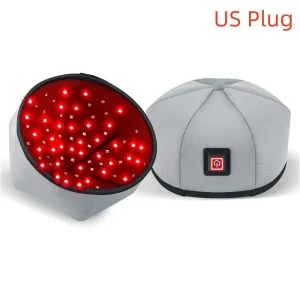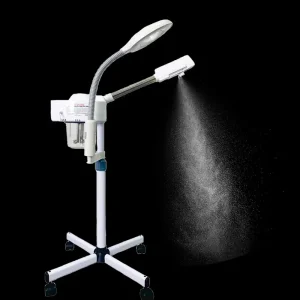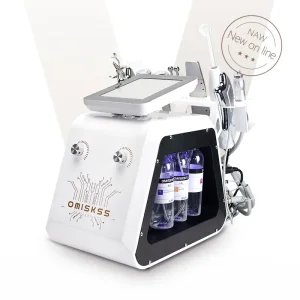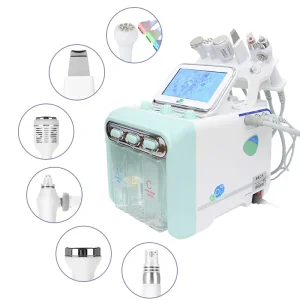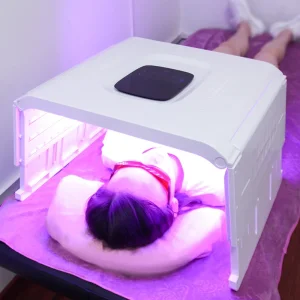
Featured Export-Grade Medical & Aesthetic Platforms
Direct from our Shenzhen Smart Manufacturing Hub. Fully customizable platforms for global distributors, medspas, and aesthetic chains.
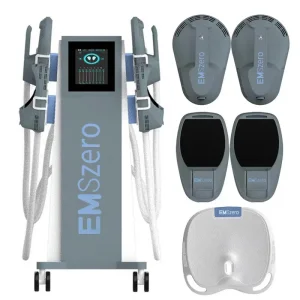
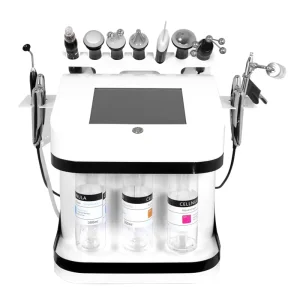
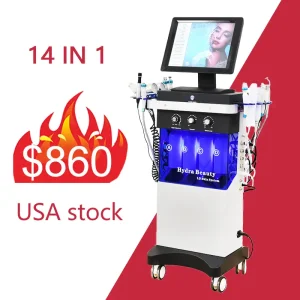
The State of OEM Laser Hair Removal: Engineering & Market Dynamics
An executive analysis of light-based photo-epilation technology, thermal relaxation management, and B2B manufacturing paradigms.
Selective Photothermolysis Physics
Modern laser hair removal operates on the validated clinical principle of selective photothermolysis (pioneered by Anderson and Parrish). The target chromophore—melanin inside the hair follicle matrix—absorbs specific optical wavelengths (typically 755nm, 808nm, and 1064nm) delivered at pulse durations equal to or shorter than the thermal relaxation time (TRT) of the follicle (typically 10ms to 100ms).
By delivering high-peak energy within exact temporal windows, optical energy converts into thermal energy (>70°C), triggering coagulative necrosis of the bulge stem cells and dermal papilla without damaging surrounding epidermal structures.
The OEM Engineering Bottleneck
For global B2B exporters and OEM factories, the core engineering challenge lies in balancing optical energy efficiency, thermal dissipation, and diode bar longevity. Inferior emitter bars suffer from high thermal degradation rates, resulting in rapid power decay, wavelength drift, and catastrophic optical damage (COD).
Leading Chinese manufacturing ecosystems have solved these issues by integrating semiconductor micro-channel cooling, gold-tin (AuSn) hard soldering technology, and high-purity premium diode bars imported from premium global semiconductor suppliers.
Next-Generation Technological Roadmap & Architecture
How advanced OEM factories are revolutionizing laser epilation through multi-wavelength integration and AI-guided real-time feedback.
1. Quad-Wavelength Matrix Array (755 / 808 / 940 / 1064 nm)
Traditional single-wavelength systems (808nm diode standard) are being superseded by multi-spectrum arrays optimized for heterogeneous skin and hair populations:
- 755nm (Alexandrite Spectrum): High melanin absorption coefficient; ideal for fine, light-colored hair (Fitzpatrick I-III).
- 808nm (Classic Diode Standard): Optimal balance between absorption and tissue penetration; maximum pulse frequency capability.
- 940nm (Coagulation Enhancement): Targeted micro-vascular absorption; coagulates deep feeding capillaries around the hair root.
- 1064nm (Nd:YAG Spectrum): Deepest penetration with minimal epidermal absorption; essential for safe treatment on dark skin (Fitzpatrick V-VI).
2. Real-Time AI Melanin Sensing & Auto-Fluence Calibration
Future-ready OEM platforms integrate optical reflectance sensors inside the handpiece head. By assessing epidermal melanin density prior to pulse emission, the central MCU (Microcontroller Unit) automatically calculates safe energy boundaries (Fluence in J/cm²) and pulse durations, virtually eliminating treatment-induced erythema or post-inflammatory hyperpigmentation (PIH).
3. Ultra-Fast Super-Short Pulse (SSP) Technology
By shortening pulse duration below the thermal relaxation time of fine hair (down to 1ms-5ms) while maintaining high peak power (up to 4000W output), modern diode lasers destroy stubborn residual hair fibers without overheating ambient dermal tissues.
4. Dynamic TEC & Compressor Dual-Loop Cooling
Patient compliance hinges on painless operation. Advanced OEMs utilize closed-loop compressor refrigeration coupled with high-output TEC (Thermoelectric Cooling) skin contact plates. This maintains the sapphire crystal tip at a constant -15°C to -20°C even during continuous 24-hour clinical operation.
Enterprise Procurement Solutions for Global Channels
Custom engineering frameworks tailored to high-volume equipment importers, franchise chain clinics, and brand owners.
Addressing the Core Commercial Pain Points of Global Buyers
B2B importers, aesthetic device brands, and medical equipment distributors encounter distinct operational challenges when sourcing laser platforms overseas. Factory-direct OEM customization must address structural reliability, total cost of ownership (TCO), and brand equity protection.
High-Volume Chain Clinics
Requires uninterrupted heavy-duty performance, minimal consumable costs, multi-user RFID operator tracking, and standardized treatment protocols pre-programmed into the Android/Linux UI interface.
Regional Medical Distributors
Demands robust modular internal layout for fast field serviceability, localized UI multi-language packs, plug-and-play quick-connect handpieces, and flexible minimum order quantities (MOQs).
Private Label Aesthetic Brands
Needs bespoke injection-molded chassis industrial design, custom colorways, branded user software (GUI), proprietary handpiece ergonomics, and full technical documentation for rapid regional registration.
China Factory 4.0: Supply Chain & Manufacturing Rigor
How automated assembly lines, optical cleanrooms, and stringent stress-testing guarantee zero-defect delivery.
Class 10,000 Optical Cleanroom Assembly
Laser diode stack packaging requires pristine atmospheric conditions. Micro-particles on optical windows cause thermal hot spots under high power densities, leading to diode burnout. Advanced OEM factories handle all optical alignment and crystal bonding inside cleanrooms strictly adhering to ISO Class 7 / Class 10,000 standards.
Automated SMT & Electronics Manufacturing
Main control boards, power drive units, and capacitor banks undergo automated Surface Mount Technology (SMT) assembly. Every PCB board is tested using Automatic Optical Inspection (AOI) to eliminate micro-soldering flaws, ensuring stable high-current pulsed output to the diode stack.
Continuous 72-Hour Stress & Burn-in Validation
Before packing, every manufactured platform undergoes rigorous quality control tests:
- Continuous Shot Fatigue Test: 100,000 continuous pulses delivered at maximum fluence.
- Thermal Extremes Cycling: Operation within environmental chambers from 10°C to 40°C.
- Laser Beam Profiling: CCD beam diagnostic cameras verify energy distribution across the spot area to eliminate dark spots.
Global Regulatory Compliance & Localized Support
Navigating international medical product approvals and guaranteeing smooth customs clearing for OEM partners.
Regulatory Certification Matrix
Global export compliance requires adherence to internationally recognized medical device directives:
- ISO 13485:2016: Comprehensive quality management systems for medical device design and manufacturing.
- CE MDR (EU 2017/745): European Union Medical Device Regulation compliance for safety and clinical performance.
- US FDA 510(k): Premarket notifications for Class II aesthetic laser systems.
- IEC/EN 60601-1 & 60601-2-22: Electrical safety and laser-specific performance standards.
End-to-End Localization Services
Distributors benefit from localized software, hardware, and marketing support to immediately capture regional market share:
- Multilingual UI Firmware: Pre-translated interfaces in over 16 languages including English, Spanish, German, French, Arabic, and Japanese.
- Custom Hardware Voltage Configurations: Dual voltage switching (110V / 220V) for regional grid adaptability.
- Complete Marketing & Technical Packs: White-label user manuals, clinical training guides, video tutorials, and promotional assets provided with every order.
Technical Matrix: Diode Laser vs. Alternative Light-Based Technologies
An engineering benchmark comparing efficiency, comfort, treatment speed, and long-term operator ROI.
| Performance Parameter | High-Power Diode Laser (OEM Standard) | Intense Pulsed Light (IPL / OPT) | Long-Pulsed Nd:YAG (1064nm) |
|---|---|---|---|
| Target Specificity | Extreme (Narrow Wavelength Band) | Broadband (515nm - 1200nm filtered) | High (Specific to Deep Tissue/Melanin) |
| Pulse Energy Delivery | Coherent, Collimated Laser Energy | Incoherent, Divergent Light Flash | Coherent High-Peak Energy |
| Epidermal Safety (Dark Skin) | Very High (Especially 808nm / 1064nm) | Moderate to Low (High Risk of Burns) | Highest (Minimal Epidermal Absorption) |
| Applicator Lifetime (Shots) | 50 Million to 100 Million+ | 300,000 to 500,000 Shots | 1 Million to 3 Million Shots |
| Cooling Efficiency | Continuous Sapphire Contact (-20°C TEC) | Basic Air/Water Cooling | Cryogen Spray / Cold Air Chiller |
| Average Payback Period (Medspa) | 2 to 4 Months | 4 to 6 Months | 8 to 12 Months |
Frequently Asked Questions: OEM & Factory Sourcing Insights
Direct technical answers addressing the most common search intents and technical queries of global equipment buyers.
Micro-channel diode bars utilize ultra-fine cooling channels directly beneath the semiconductor emitters. This provides superior heat dissipation per unit area, enabling higher power density, shorter pulse durations, and significantly extended shot lifetimes (100M+ shots) compared to macro-channel systems. However, micro-channel systems require ultra-pure deionized water filtration circuits, which our factory equips as a standard build feature.
We utilize precision-ground optical light guides (sapphire or quartz prisms) paired with specialized micro-lens array (MLA) optical homogenizers. This converts Gaussian laser beam profiles into uniform flat-top square or rectangular beams, eliminating central hot-spots and peripheral energy drop-offs for homogenous clinical outcomes.
Our OEM scope includes complete structural and aesthetic flexibility: custom chassis industrial design (3D CAD rendering to rapid prototyping), injection molding colors, screen GUI brand customization, logo screen printing, custom handpiece spot-size tips, multi-wavelength configuration ratios, and custom packaging solutions tailored to international freight standards.
Standard model orders ship within 7 to 10 business days. Custom OEM orders featuring branded UI firmware, custom body colors, and personalized silk-screen logos typically take 15 to 25 business days. Completely new ODM projects involving custom chassis tooling require 45 to 60 calendar days from CAD lock to pilot production batch.
All professional platforms carry a standard 1 to 2-year factory warranty. In the event of a technical component issue, our engineering support team conducts remote diagnostic troubleshooting within 24 hours. Replacement modular parts (such as quick-swap power supplies, filter cartridges, or entire handpiece assemblies) are dispatched immediately via express air shipping to minimize equipment downtime.
Additional OEM Aesthetic Equipment Portfolio
Expand your clinic portfolio with factory-direct solutions engineered to international standards.