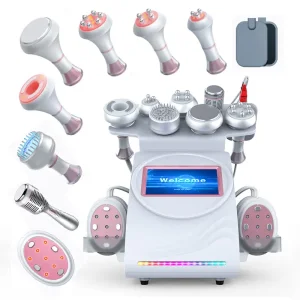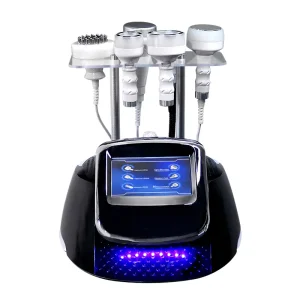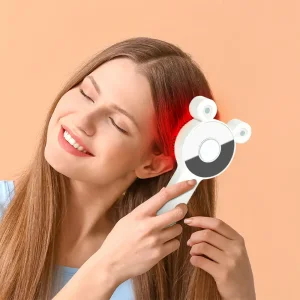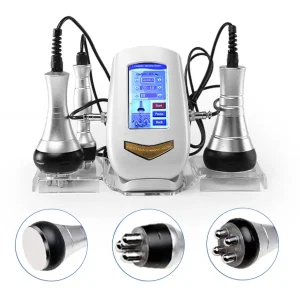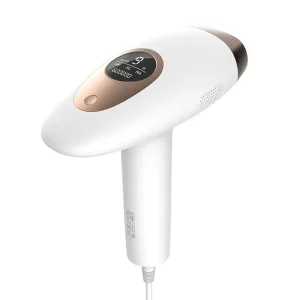
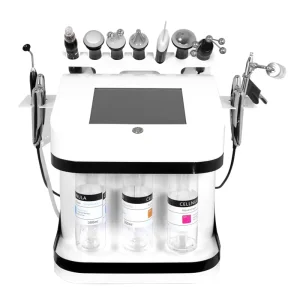
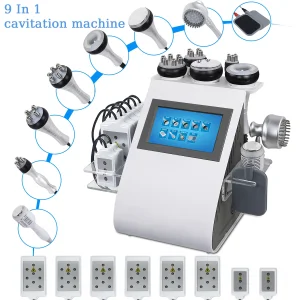
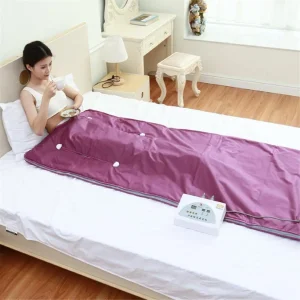
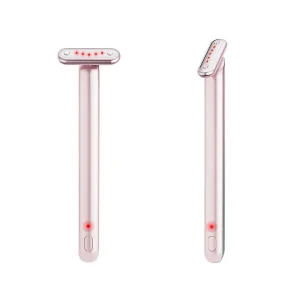
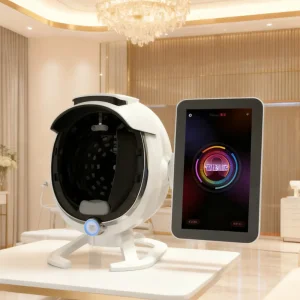
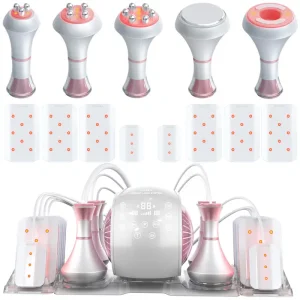
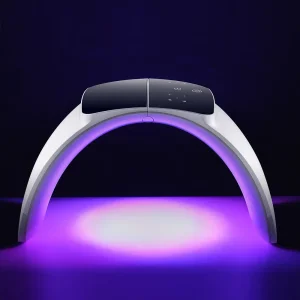
Featured Professional Facial & Aesthetics Equipment
Explore our factory-direct aesthetic systems featuring high-power LED light modules, multi-polar RF, EMS muscle conditioning, and medical-grade hydra-exfoliation engineering.
1. Executive Summary & Photobiomodulation (PBM) Industrial Evolution
Over the past decade, facial red light therapy (RLT) has transitioned from a niche spa modality into a scientifically validated, medical-grade phototherapeutic market segment. Understanding the mechanics of cellular photo-reception is critical for enterprise buyers specifying custom devices.
Cytochrome c Oxidase Activation
The primary chromophore targeted by red (630nm-660nm) and near-infrared (830nm-850nm) photons is Cytochrome c Oxidase (Unit IV in the mitochondrial respiratory chain). Photons displace inhibitory Nitric Oxide (NO), reversing cellular stress and stimulating continuous Adenosine Triphosphate (ATP) production.
Dual-Wavelength Optical Synergy
Facial skin structures require stratified photon penetration depth. Visible 630nm/660nm red light targets epidermal keratinocytes to accelerate cell turnover, while non-visible 830nm/850nm near-infrared light penetrates deep into the dermal fibroblast layer, stimulating Type I and Type III collagen synthesis.
Pulsed Light & Cellular Resonant Modes
Modern custom hardware incorporates micro-controller pulsed wave frequencies (1Hz to 10,000Hz). Pulsed delivery prevents tissue thermal adaptation, reduces peak diode heat output, and optimizes intracellular reactive oxygen species (ROS) signaling for enhanced tissue repair.
2. Global Enterprise Procurement & Market Demand Dynamics
Global demand for red light therapy for facial applications has bifurcated into distinct procurement channels: medical dermatological institutions requiring high-energy static arrays, aesthetic clinics demanding multifunctional platforms, and D2C brands offering flexible, high-compliance home devices.
D2C & Omnichannel Brands
Importers focus heavily on ergonomic silicone mask molds, ultra-lightweight designs, intuitive UI controllers, magnetic charging ports, and custom retail packaging engineered for high unboxing value and zero transit damage rates.
Commercial MedSpas & Salons
Procurement requirements shift toward high-irradiance canopy panels (100–150 mW/cm² at 15cm distance), heavy-duty articulated support arms, touch-screen OS interfaces, and multi-wavelength programming combining Blue (415nm), Yellow (590nm), and Red/NIR phototherapy.
Global Regulatory Benchmarks
Tier-1 buyers require compliance with global safety frameworks: US FDA 510(k) Class II clearance, EU Medical CE MDR 2017/745, IEC 62471 Photobiological Safety (Zero Eye Blue Light Hazard), ISO 13485 quality system management, and RoHS/REACH material certifications.
3. Comprehensive OEM / ODM Customization Architecture
Our manufacturing facilities provide end-to-end custom engineering solutions for enterprise buyers. From optical die customization to embedded firmware programming, we convert brand concepts into high-reliability hardware products.
Optical & Chip Level Customization
Selection of high-efficiency Epiwafer chips, custom optical lens angles (30° focus lenses for deep targeted penetration or 120° wide beam angles for broad uniform coverage), and dual/triple chip integration inside single 5050 SMD LED packages.
PCB Engineering & Thermal Management
High thermal conductivity aluminum-backed PCBs (MCPCB) engineered with active/passive heat sinking systems. Ensures LED junction temperatures remain below 65°C, preventing spectral drift and guaranteeing a <3% photon decay over 10,000 continuous operating hours.
Ergonomic Industrial Design & Materials
Choice of food-grade, biocompatible liquid silicone rubber (LSR) flexible masks, custom injection-molded ABS housing, specialized surface spray coatings (soft-touch UV, metallic anodizing), and customizable facial contours tailored to North American, European, or Asian facial anatomies.
Smart Firmware & App Integration
Custom BLE (Bluetooth Low Energy) / Wi-Fi module integration, proprietary iOS/Android mobile apps for custom treatment tracking, wireless OTA (Over-The-Air) firmware updates, and capacitive touch controllers with custom OLED displays.
4. China Factory 4.0: Supply Chain Resilience & Manufacturing Efficiency
Situated at the heart of the world’s most advanced electronics hardware ecosystem in Shenzhen, our manufacturing facilities embody Factory 4.0 principles. We combine rapid prototyping, automated optical inspection, and tight supply chain integration to deliver unmatched speed-to-market.
Automated SMT High-Speed Assembly
Our fully automated Surface Mount Technology (SMT) lines feature high-precision robotic placement heads capable of mounting over 40,000 micro-LED components per hour, achieving a zero-defect soldering placement accuracy of ±0.01mm.
Full Spectroradiometer & QC Protocol
Every batch of manufactured red light masks and panels undergoes 100% optical inspection using Integrating Spheres and high-precision Spectroradiometers. We verify exact nanometer peak emissions (e.g., 660nm ± 2nm) and measure precise optical power density ($mW/cm^2$) prior to packaging.
72-Hour Stress & Burn-In Aging Test
To guarantee complete field reliability, 100% of finished assemblies are routed through climate-controlled aging chambers under continuous thermal and electrical stress for 72 hours, eliminating early component failure risks before international shipment.
5. Localized Application Scenarios & Clinical Operational Workflows
Integrating custom facial red light therapy into commercial, clinical, and consumer environments requires customized operational workflows optimized for maximum biological efficacy and throughput speed.
Post-Aesthetic Surgery & Laser Recovery
Applied immediately after ablative laser resurfacing, chemical peels, or microneedling treatments. A 15-minute 660nm/850nm session downregulates pro-inflammatory cytokines (TNF-alpha, IL-1b), accelerates skin re-epithelialization, and reduces post-procedure erythema edema by up to 45%.
Dermatological Acne Protocol Integration
Combining dual-wavelength red (630nm) and blue light (415nm). Blue wavelengths trigger endogenous porphyrin excitation within Propionibacterium acnes to release singlet oxygen and eliminate bacteria, while red wavelengths reduce post-acne inflammation and promote tissue remodeling.
Executive Anti-Aging Express Treatments
Standardized 10-minute facial light sessions deployed in express urban spas. High-irradiance arrays deliver a therapeutic dose ($6 J/cm^2$ to $12 J/cm^2$) quickly without downtime, allowing clients to receive treatment during business break periods.
Home Maintenance Omnichannel Systems
Offered by clinical spas as an extending home-care regimen following clinical procedures. Flexible silicone masks allow end users to maintain skin cell activation between monthly clinical treatments, extending treatment longevity and strengthening client retention.
6. Frequently Asked Questions (B2B Enterprise Procurement)
Detailed answers addressing engineering, quality assurance, regulatory compliance, and OEM/ODM manufacturing workflows for corporate buyers.
What is the optimal irradiance ($mW/cm^2$) and dose ($J/cm^2$) for facial red light therapy?
For facial applications, clinical studies indicate an ideal surface irradiance of 30 mW/cm² to 105 mW/cm² at skin distance. This delivers a therapeutic radiant energy dose (fluence) of 4 J/cm² to 15 J/cm² within a standard 10-to-20-minute session. Excessively high irradiance risks thermal overload, while insufficient irradiance requires impractically long treatment times.
How do your factories ensure spectral accuracy and prevent LED wavelength drift?
We source bin-sorted LED chips with narrow spectral half-widths (FWHM < 15nm). Each PCB incorporates high-thermal-conductivity aluminum substrates (MCPCB) coupled with optimized heat sinking. This maintains junction temperatures well below critical thresholds during continuous operation, preventing wavelength drift away from target peaks (e.g., 660nm and 850nm).
What certifications are required to import custom facial red light devices into North America and Europe?
For North America, devices typically require FDA 510(k) Class II Clearance or registration, along with FCC testing for electromagnetic compatibility. For Europe, devices must comply with Medical CE under MDR 2017/745 or standard CE-EMC/LVD, IEC 62471 Photobiological Eye Safety Certification (proving zero ocular harm), and RoHS/REACH material compliance standards.
What are the Minimum Order Quantities (MOQ) and lead times for custom OEM flexible masks vs. rigid panel systems?
Standard OEM private label projects (custom logo, silkscreen printing, custom packaging) start at an MOQ of 100–500 units with a lead time of 2–3 weeks. Full ODM projects requiring custom liquid silicone rubber (LSR) injection tooling or novel PCB layouts carry an MOQ of 1,000+ units, with tooling and prototype approval completed in 45–60 days.
Can your factory integrate custom multi-wavelength arrays (e.g., 415nm Blue, 590nm Yellow, 660nm Red, 850nm NIR) into one device?
Yes. We specialize in engineering multi-chip LED packages (such as 5050 or 3528 SMD LEDs housing multiple dies) or strategic circuit zoning. Our microcontrollers can be programmed to run isolated mono-spectral treatments or automated multi-wave sequential protocols targeted at complex clinical facial conditions.
How do you handle quality control for large-scale international shipments?
Our quality control protocol follows strict ISO 13485 medical device standards. Process checks include Incoming Material Inspection (IQC), SMT Automated Optical Inspection (AOI), 100% Spectroradiometer optical output verification (PQC), a mandatory 72-hour elevated-temperature burn-in test, and final pre-shipment AQL 1.0/2.5 sampling (FQC).
Explore Additional Industrial Aesthetic Platforms
Complementary body contouring, fat reduction, cavitation, and personal care equipment manufactured to high international quality standards.