
Clinical-Grade Equipment Portfolio
Direct factory sourcing solutions engineered for global importers, aesthetic clinic franchises, and healthcare distributors.
Deconstructing LED Mask "Before & After" Results: The Biophysical Evidence
In the rapidly expanding global aesthetic device market, the term "Custom LED Mask Before And After" has shifted from a superficial retail marketing narrative into a stringent, data-driven engineering benchmark. Commercial enterprise buyers—ranging from dermatology clinic chains and medical spas to global D2C skincare tech brands—require verifiable, clinically validated photobiomodulation (PBM) outcomes. True therapeutic transformational results are not driven by ambient light intensity or aesthetic outer shell designs, but by precise optical physics, wavelength purity, and energy density ($J/cm^2$).
Photobiomodulation operates on the principle of chromophore activation within human tissue. When skin cellular matrix structures are exposed to specific narrow-band wavelengths, mitochondrial Cytochrome c Oxidase (CCO) absorbs photon energy. This catalytic reaction accelerates Adenosine Triphosphate (ATP) synthesis, triggers reactive oxygen species (ROS) modulation, and upregulates gene transcription responsible for Type I and Type III collagen neocollagenesis.
Wavelength Precision & Biological Action Mechanics
To achieve statistically significant "Before and After" clinical trials (typically measured via VISIA 3D complex analysis over an 8-to-12-week regimen), specialized custom OEM factories must tune Light Emitting Diodes within ultra-narrow spectral tolerances ($\pm 3nm$ to $\pm 5nm$). Broad-spectrum consumer LEDs fail because energy outside the therapeutic window produces thermal dissipation rather than cellular excitation.
Red Light (633nm $\pm 5nm$)
Targets papillary dermis fibroblasts. Triggers TGF-$\beta$ signaling pathways, accelerating cellular turnover, smoothing fine periorbital lines, and repairing photodamaged tissue matrix.
Near-Infrared (830nm $\pm 5nm$)
Penetrates reticular dermis and subcutaneous layers. Stimulates micro-capillary circulation, enhances lymphatic drainage, reduces deep inflammatory responses, and tightens sagging facial contouring.
Blue Light (415nm $\pm 3nm$)
Photo-excites endogenous porphyrins within Propionibacterium acnes (P. acnes). Induces singlet oxygen destruction of pathogenic bacteria without destabilizing cutaneous microbiome balance.
Phototherapy obeys the Arndt-Schulz law: insufficient optical energy density ($< 10 J/cm^2$) yields zero physiological effect, while excessive dose exposure leads to cellular inhibition or thermal stress fatigue. A top-tier LED mask factory designs driver circuitry to maintain target irradiance across multi-diode arrays throughout 10-20 minute therapeutic sessions.
Global B2B Market Dynamics & Sourcing Demands
The commercial trajectory for customized phototherapy hardware has experienced an unprecedented surge across North America, Europe, the Middle East, and Asia-Pacific. Enterprise procurement teams no longer seek off-the-shelf plastic molds; they demand tailored OEM/ODM hardware capable of reinforcing unique brand positioning, passing localized medical certification hurdles, and ensuring high customer lifetime value through documented transformational results.
| Buyer Segment | Primary Clinical Focus | Key Hardware Requirements | Compliance & Regulatory Standards |
|---|---|---|---|
| Medical Spas & Aesthetic Clinics | Post-treatment recovery (post-laser, post-microneedling erythema reduction) | High irradiance ($>45 mW/cm^2$), multi-chip LEDs, broad spatial coverage | CE Medical (MDR), US FDA Class II 510(k), ISO 13485 |
| D2C Beauty Tech Brands | Anti-aging wrinkle reduction, acne spot treatment, daily skin maintenance | Ergonomic flexible silicone, app integration, sleek aesthetics, custom packaging | FCC, CE-EMC, RoHS, REACH, UN38.3 (Battery) |
| Dermatology Chains & Wholesalers | Targeted inflammatory management (Rosacea, hyperpigmentation, eczema) | Calibrated dual-waveband output, clinical trial trial-data packaging | IEC 62471 Photobiological Safety, ISO 10993 Biocompatibility |
| Hotel & Luxury Spa Chains | Express facial rejuvenation, premium wellness room add-on amenities | Sanitizable medical-grade silicone, wireless dock charging, intuitive controls | CE, UL safety compliance, IPX7 waterproof standards |
Regional Procurement Norms & Standards
Navigating international supply chains requires strict alignment with localized regulatory frameworks. In North America, the FDA classifies LED therapeutic masks under 21 CFR 878.4810 (Laser surgical instrument for use in general and plastic surgery and dermatology). Enterprise importers partnering with a China factory must ensure the manufacturing facility holds valid ISO 13485 quality management systems and provides complete Device Master Files (DMF) for 510(k) submission support.
China's Manufacturing Advantage in Custom Phototherapy Hardware
China’s Greater Bay Area (GBA)—specifically Shenzhen and Dongguan—represents the epicenter of global electronic hardware manufacturing. Sourcing **Custom LED Masks** directly from qualified export manufacturers offers enterprise buyers unmatched industrial advantages across supply chain integration, cost structure optimization, optical engineering agility, and rapid scalability.
Full Industrial Ecosystem Integration
From SMT (Surface Mount Technology) high-speed LED chip placement to liquid silicone rubber (LSR) injection tooling, all components are sourced within a 30-kilometer radius, drastically shortening production lead times.
Advanced Optical Calibration & QC
Leading exporters employ integrating spheres, optical goniophotometers, and spectroradiometers to audit every batch for spectral radiant flux, spatial beam distribution, and optical decay profiles.
Bespoke OEM/ODM Tooling Flexibility
Custom 3D facial mapping tooling allows factories to fabricate flexible silicone masks tailored to specific ethnic face contours (Asian, Caucasian, Afro-centric structural fits) ensuring zero light leakage.
A professional manufacturing facility operates Class 100,000 dust-free cleanrooms for optical lens assembly and silicone encapsulation. This guarantees zero particle contamination within the optical path, preventing micro-shadowing that degrades clinical before-and-after results over time.
Localized Application Scenarios & Protocol Integration
The commercial utility of custom LED masks extends far beyond basic home beauty care. Enterprise procurement channels design specialized device specifications tailored to distinct operational environments. Modern aesthetic protocols leverage light therapy as a multiplier when combined with topical active compounds or invasive dermatological treatments.
Clinical Post-Procedure Recovery
Used immediately following Ablative Fractional CO2 Laser, RF Microneedling, or Chemical Peels. Near-Infrared (830nm) phototherapy reduces post-procedural downtime from 7 days to 48 hours by downregulating pro-inflammatory cytokines (IL-1$\beta$, TNF-$\alpha$).
Home-Use Premium Anti-Aging Maintenance
Consumer-facing D2C brands offer lightweight, food-grade flexible silicone LED masks. Programmed with 10-minute automated auto-off timers and wireless controller pads, enabling seamlessly integrated daily self-care rituals.
Acne & Microbiome Balancing Clinics
Targeted multi-spectrum protocols combining 415nm Blue light (bactericidal) with 633nm Red light (anti-inflammatory healing). Clinically proven to reduce inflammatory lesion counts by up to 68% in 4 weeks.
Next-Generation Technological Trends in LED Mask Manufacturing
As competition intensifies, global market leaders are moving away from traditional single-waveband rigid plastic masks. Sourcing directors seeking sustainable competitive advantages must align with ODM factories driving innovation across material science, smart connectivity, and multi-modal technology integration.
Multi-Chip Dual-Die LED Packaging
Embedding Red (633nm) and Near-Infrared (830nm) emitters into a single micro-encapsulated SMT diode node. This doubles spatial emitter density, eliminates optical dead zones, and improves overall photon coverage by 40%.
Biocompatible Liquid Silicone (LSR)
Transitioning from rigid ABS shells to ultra-flexible, hypoallergenic medical silicone. The mask conforms perfectly to facial curvature, minimizing distance-to-skin loss ($1/r^2$ optical intensity decay rule).
AI Diagnostic & App Synchronization
Smart masks equipped with Bluetooth LE connect to mobile diagnostic apps. AI skin analysis algorithms automatically customize session durations, spectral blend ratios, and intensity levels based on real-time skin hydration and hyperpigmentation metrics.
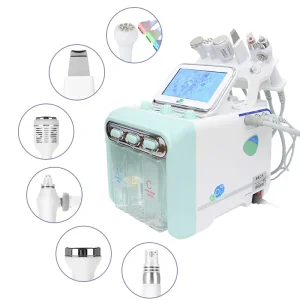
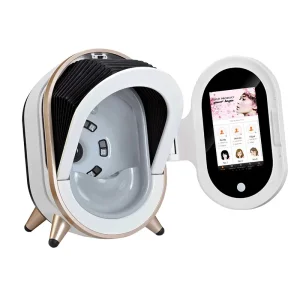
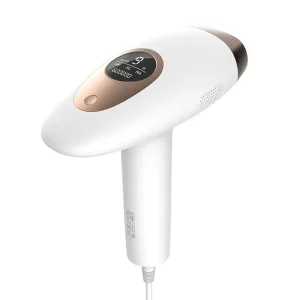
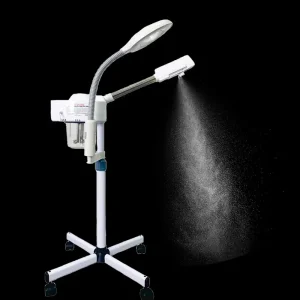
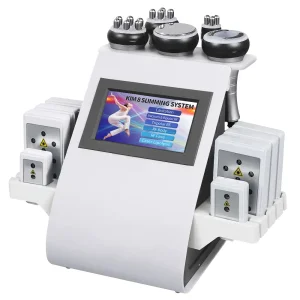
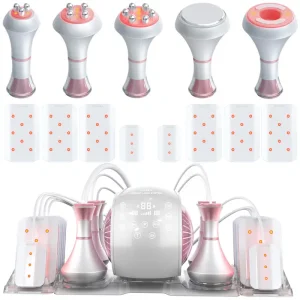
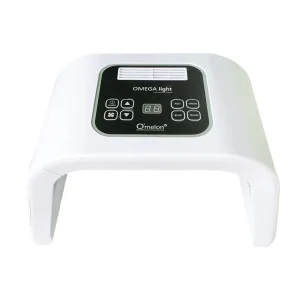
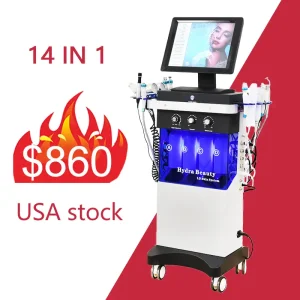
Complementary Aesthetic & Phototherapy Range
Expand your commercial catalog with factory-direct OEM/ODM beauty tech systems certified for worldwide export.
Enterprise Procurement Framework: How to Evaluate an LED Mask Factory
Selecting the right manufacturing partner is the single most critical decision for beauty tech brand directors and medical aesthetic importers. To safeguard brand equity and eliminate product recall risks, global procurement teams must audit candidate factories against five core technical capabilities:
1. Optical Irradiance Audit
Verify that the factory measures light output at actual skin surface distance ($0mm$) using calibrated spectroradiometers rather than quoting unverified raw chip power levels.
2. Thermal Management Architecture
Ensure the circuit design incorporates aluminum PCB heat sinks or thermal dissipation layers. Excessive diode heat degrades LED lifespan and causes wavelength shifts ($>10nm$).
3. Turnkey OEM Customization Options
Audit OEM capabilities: silkn-screen logo printing, custom silicone pantone color matching, proprietary controller firmware development, and bespoke magnetic retail packaging.
Frequently Asked Questions: Custom LED Mask Sourcing & Technology
Detailed technical and commercial answers designed for procurement specialists, brand managers, and aesthetic importers.