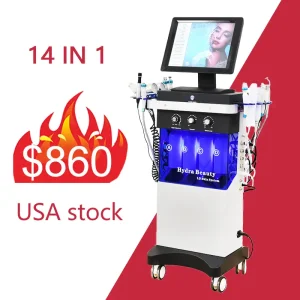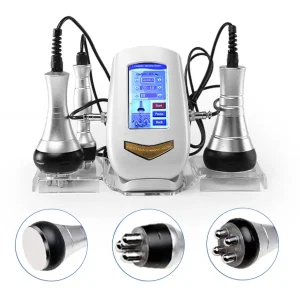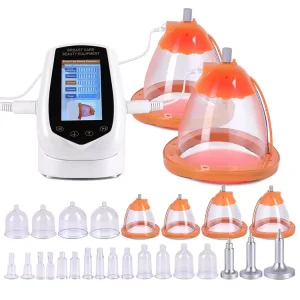
Featured B2B Laser & Aesthetic Device Equipment Exports
Explore our certified commercial-grade aesthetic equipment array engineered for high-volume clinical deployments, medical spas, and international OEM/ODM private label distribution channels.
1. Executive Macro Analysis: The Global Energy-Based Aesthetic Equipment Market
The global market for professional laser hair removal systems and medical-grade clinical aesthetic hardware is undergoing a structural paradigm shift. Driven by skyrocketing consumer demand for non-invasive cosmetic procedures, rapid advancements in optoelectronic semiconductor diodes, and an accelerating preference for permanent hair reduction across diverse demographic cohorts, the clinical laser hair removal service sector represents one of the highest yielding verticals in aesthetic dermatology.
Modern clinic operators, regional distributors, and medical spa chains no longer view hair removal machinery as standalone capital expenditure items, but rather as central profit drivers requiring optimal operational efficacy, minimal patient discomfort, zero downtime, and robust return-on-investment (ROI). Consequently, the global B2B procurement model has shifted toward direct partnerships with experienced specialized original equipment manufacturers (OEM) and custom exporters capable of delivering medical-grade performance, regulatory compliance, custom physical enclosures, software localization, and long-term technical warranties.
As clinical demands grow increasingly sophisticated, exporters must bridges the gap between raw optoelectronic component manufacturing (such as German Coherent/Dilas diode bars) and final clinical usability. Custom laser hair removal clinic services encompass bespoke handpiece design, integrated active cooling infrastructure (TEC compressor systems), real-time energy calibration algorithms, and smart clinic IoT software management suites.
2. Photothermal Physics & Clinical Engineering Dynamics
To deliver effective permanent epilation without causing epidermal collateral thermal injury, custom laser hair removal devices must strictly operate under the principle of Selective Photothermolysis (first conceptualized by Anderson and Parrish). The fundamental goal is targeting the chromophore (melanin) contained within the hair shaft, follicle matrix, and outer root sheath while preserving adjacent cutaneous architectures.
Wavelength Selection & Penetration Depth
Light energy absorption by melanin decreases monotonically as wavelength increases. However, longer wavelengths penetrate deeper into the dermis to target deep-seated hair bulbs (e.g., in male beard areas or pubic regions). Triple-wavelength diode configurations combine 755nm (high melanin absorption for superficial fine hair), 808nm (the clinical gold standard balance for Fitzpatrick Types I-IV), and 1064nm (low melanin absorption, deep dermal penetration for dark Fitzpatrick Types V-VI).
Pulse Duration vs. Thermal Relaxation Time (TRT)
The pulse duration (width) emitted by the diode array must be strictly synchronized with the Thermal Relaxation Time of the targeted hair follicle (typically 10ms to 100ms depending on hair diameter). Delivering laser fluence ($J/cm^2$) within a pulse width shorter than or equal to the target's TRT ensures thermal confinement, resulting in localized follicular necrosis (temperatures exceeding $65^\circ C$ to $70^\circ C$) while enabling surrounding epidermal tissues to dissipate heat effectively.
Advanced Sub-Zero Epidermal Contact Cooling
Custom laser clinic equipment incorporates integrated sapphire crystal windows coupled with high-performance Thermoelectric Cooler (TEC) modules and liquid closed-loop heat exchangers. By pre-cooling, parallel-cooling, and post-cooling the stratum corneum to $-5^\circ C \sim -15^\circ C$, high energy fluences (up to $120 J/cm^2$) can be safely delivered painlessly, suppressing nociceptor sensory stimulation and preventing thermal burns on high-melanin skin types.
| Wavelength | Primary Chromophore Target | Optimal Fitzpatrick Skin Types | Target Hair Characteristics | Clinical Advantages & Depth Profile |
|---|---|---|---|---|
| 755nm Alexandrite Equivalent | High Melanin Absorption Peak | Fitzpatrick Types I - III | Fine, light brown, residual hair | Superficial dermal penetration; exceptional for thin, shallow hair shafts. |
| 808nm Gold Standard Diode | Balanced Melanin Absorption | Fitzpatrick Types I - V | Standard coarse to medium dark hair | Mid-to-deep dermal penetration; perfect balance between thermal efficacy and safety. |
| 1064nm Nd:YAG Equivalent | Hemoglobin & Deep Follicular Root | Fitzpatrick Types IV - VI (Dark / Tanned Skin) | Coarse, deep-rooted dense hair | Deepest dermal penetration (up to 4-5mm); bypassing epidermal melanin absorption to protect dark skin. |
| Quattro 4-Wavelength Hybrid (755/808/940/1064nm) |
Multi-Layered Melanin & Vascular Micro-Vessels | Universal (Fitzpatrick Types I - VI) | Mixed density hair profiles across body regions | Simultaneous multi-depth energy emission targeting hair bulges, bulbs, and papillae concurrently. |
3. Industrial Trends, AI Integration & Technical Roadmap (2025–2035)
The competitive landscape for medical aesthetic device exporters is evolving beyond mechanical component assembly. Future-ready custom laser hair removal devices integrate smart software, artificial intelligence, IoT data telemetry, and modular engineering architectures to empower enterprise clinic networks.
Transitioning from macro-channel arrays to gold-tin (AuSn) bonded micro-channel vertical stacks and non-channel laser bars. This architectural shift boosts optical power density from 600W up to 2400W per handpiece, enabling ultra-short pulse widths (<10ms) at maximum fluences, which radically improves clinical destruction of stubborn hair follicles while significantly increasing bar lifespan past 100 million shots.
Integration of real-time spectrophotometric melanin sensors directly into the spot tip. The laser console dynamically measures local epidermal melanin concentrations, skin moisture levels, and subsurface vascular density, automatically adjusting pulse duration, frequency (Hz), and fluence ($J/cm^2$) dynamically during treatment to completely eliminate human operator error.
Implementation of cloud-connected Android operating systems across laser platforms. Clinic chain executives can monitor operational parameters across global franchises in real time—tracking total shot counts, component wear, handpiece thermal load curves, operator efficiency, and predictive maintenance schedules prior to hardware failure.
Merging robotic articulating arms with automated computer vision tracking for high-speed, uniform scanning over large body treatment zones (such as full back or legs) with zero operator fatigue, coupled with hybrid picosecond skin rejuvenation modes within the same optical path.
4. Localized Application Scenarios & Global Enterprise Solutions
Laser hair removal service requirements vary significantly across global geographic zones based on regional demographic skin phototypes, regulatory standards, clinic business models, and environmental operational conditions.
North American & European Medical Clinics
In highly regulated markets (FDA 510(k), Medical CE MDR 2017/745), clinic operators prioritize strict safety certifications, medical-grade documentation, fault-tolerant interlock systems, high throughput (up to 20Hz continuous sliding in-motion delivery), and sleek modern casing that aligns with premium aesthetic clinic branding.
LATAM, Middle East & APAC Enterprise Growth
In tropical climates and regions dominated by darker skin phototypes (Fitzpatrick IV-VI), equipment exporters must supply ultra-heavy-duty continuous TEC cooling radiators capable of sustaining $40^\circ C$ ambient room operation alongside high-fluence 1064nm diode configurations to prevent post-inflammatory hyperpigmentation (PIH).
Comprehensive OEM/ODM Exporter Solutions
Leading exporters provide turnkey OEM customization options including injection-molded chassis fabrication, bespoke UI/UX software branding, magnetic interchangeable spot size handpiece tips (e.g., $15\times15mm^2$, $15\times25mm^2$, $6mm$ facial tip), and direct integration of auxiliary treatment handles (such as IPL, RF, or hydrodermabrasion).
5. Deep-Dive Industry & Engineering FAQ
Comprehensive technical solutions compiled by senior optical engineers and export compliance specialists to address critical queries raised by clinic procurement managers, medical distributors, and private-label brands.
The primary difference lies in spectral coherence, monochromaticity, and energy focus. Diode lasers produce a single, highly coherent, collimated wavelength of light (such as 808nm or 755/808/1064nm combined) specifically tailored to the absorption spectrum of melanin. This allows targeted thermal destruction of hair follicles deep in the dermis without scattering energy into surrounding cutaneous tissues.
Conversely, IPL emits a broad spectrum of non-coherent polychromatic light (typically 400nm to 1200nm). While filter blocks are used to narrow the bandwidth, IPL light scatters significantly more, penetrates less deeply, and is absorbed non-specifically by surrounding skin structures, rendering it less effective for deep coarse hair and significantly riskier for darker skin phototypes (Fitzpatrick IV-VI).
Optical physics dictates that larger spot sizes reduce photon scattering loss within dermal tissue. When light enters the skin from a small spot size (e.g., $10\times10mm^2$), a high percentage of light energy scatters laterally and dissipates superficially. A larger spot size (e.g., $15\times30mm^2$ or $12\times38mm^2$) drives photons deeper into the tissue matrix with greater energy density retained at the level of the hair bulb.
From an operational standpoint, larger spot sizes enable clinic practitioners to complete full-body hair removal treatments in less than 20-30 minutes, dramatically raising clinic patient turnover, reducing operator wrist fatigue, and increasing the overall revenue capacity per treatment room.
Tier-1 OEM/ODM exporters maintain comprehensive international quality management frameworks, most notably ISO 13485 certification for medical device manufacturing. Devices destined for European markets undergo rigorous testing to obtain Medical CE certificates under the EU MDR 2017/745 regulation. For North American markets, devices are manufactured following FDA 21 CFR 1040.10 laser safety requirements and Class II medical device specifications.
Exporters supply complete technical documentation packages including Electromagnetic Compatibility (EMC) test reports, Electrical Safety (LVD EN 60601-1) reports, laser output energy calibration certificates, and full biological evaluation documentation for skin-contacting handpiece materials.
The lifespan of a laser handpiece is fundamentally determined by three engineering factors: 1) Diode Bar Metallurgy & Origin: Using premium German-engineered bars bonded with Gold-Tin (AuSn) solder prevents thermal expansion stress and chip thermal degradation. 2) Cooling Loop Purity & Heat Dissipation: High-volume water pumps combined with deionized resin filters and medical-grade TEC compressors ensure water temperatures surrounding the diode stack never exceed $35^\circ C$. Overheating is the primary cause of bar burn-out. 3) Driver Power Supply Quality: Utilizing constant-current, low-ripple power modules prevents electrical current spikes from damaging micro-junctions during high-frequency firing (10-20Hz).
Through our dedicated OEM/ODM engineering workflow, distributors can submit CAD drawings or select from our modular chassis templates. Customization includes custom injection-molded acrylic colors, metallic paint finishes, integrated clinic logos, custom screen sizes (10.4-inch up to 15.6-inch Android HD touchscreens), multi-language software localization, and custom user workflow UI designs.
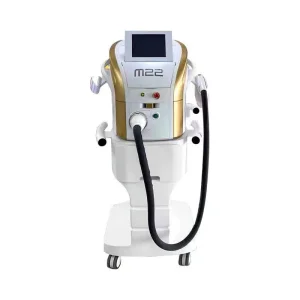
On the hardware level, we can integrate multi-technology combo systems—such as pairing a 808nm diode handpiece with an auxiliary Alexandrite 755nm handpiece, dynamic IPL applicator, or RF skin tightening module within a single consolidated power cabinet.
Advanced Clinical & Personal Care Equipment Portfolio
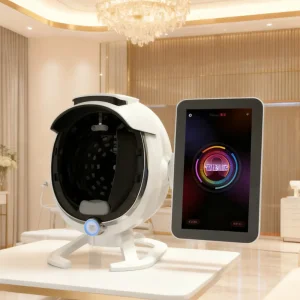
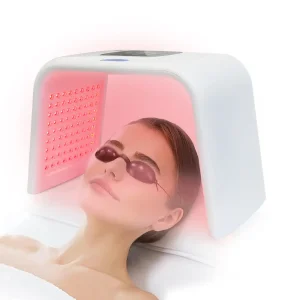
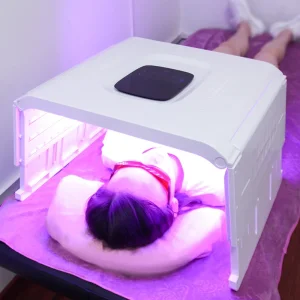
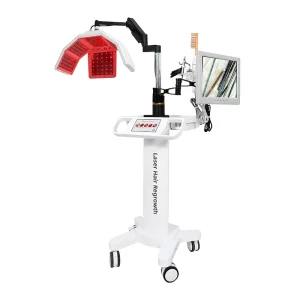
Browse our full range of international export devices including AI diagnostic skin analyzers, body sculpting systems, PDT photon therapy arrays, and anti-hair loss laser solutions.