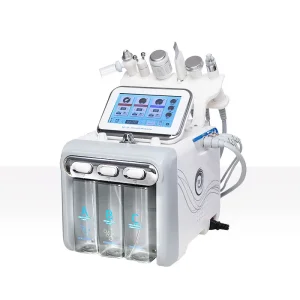
Featured Certified Aesthetic & Phototherapy Platforms (Part I)
Explore high-performance certified equipment engineered by leading Chinese OEM manufacturers for global distribution and clinical deployment.
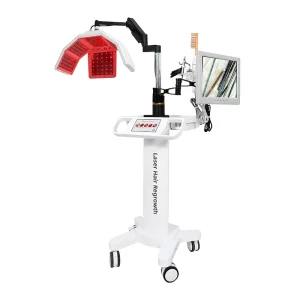
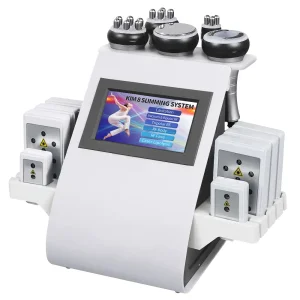
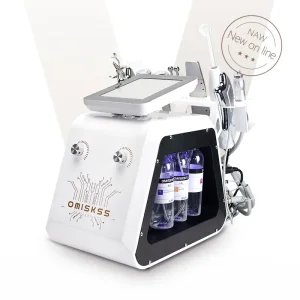
1. Macro-Industry Solutions & Global Commercial Realities
The global phototherapy and non-invasive aesthetic equipment market has experienced a fundamental paradigm shift over the past decade. Driven by rigorous clinical research into cellular bio-stimulation, high-power LED optical emitter technology, and expanding consumer demand for non-thermal, zero-downtime therapies, Red Light Therapy (RLT) and Photobiomodulation (PBM) machines have evolved from niche spa wellness novelties into regulated medical and commercial-grade interventions.
Today, institutional healthcare facilities, sports medicine institutes, dermatology practices, and luxury medical spas require fully verified, heavy-duty photobiomodulation units. For procurement directors, B2B importers, and private-label distributors, selecting a manufacturing partner goes beyond basic sourcing—it demands an end-to-end evaluation of factory optical calibration capabilities, electrical safety compliance, thermal management engineering, and certified quality management systems (ISO 13485 / ISO 9001).
Clinical Efficacy & Cellular Mechanism
Red Light Therapy operates via targeted photon absorption by Cytochrome c Oxidase (CCO) within the mitochondrial respiratory chain. This photo-biochemical reaction stimulates Adenosine Triphosphate (ATP) synthesis, modulates Reactive Oxygen Species (ROS), and accelerates cellular repair processes without thermal tissue ablation.
Industrial Reliability & Build Quality
Commercial deployment demands continuous operational duty cycles. Premium factories employ solid-state aluminum PCB substrates, high-CFM ultra-quiet cooling fans, and medical-grade power supplies to prevent irradiance decay and thermal throttling during multi-hour clinic operations.
Precision Optical Beam Engineering
Optical beam dispersion directly controls energy dose delivered to target tissue. Industrial suppliers utilize precision-molded 30° or 60° secondary optical lenses over each LED chip to minimize light scattering and guarantee effective irradiance ($mW/cm^2$) at operational working distances.
2. Biological Wavelength Physics & Engineering Specifications
The therapeutic efficacy of any photobiomodulation system relies strictly on two fundamental physical variables: Wavelength ($\lambda$, measured in nanometers) and Energy Density (Fluence, measured in Joules per square centimeter, $J/cm^2$). Commercial-grade Red Light Therapy machines manufactured by certified Chinese suppliers are engineered around specific narrow-band optical windows optimized for deep tissue penetration.
| Wavelength Band | Optical Penetration Depth | Primary Biological Chromophore | Target Clinical / Commercial Application |
|---|---|---|---|
| 630nm – 660nm (Visible Red) | Superficial Dermal Layers (2mm – 3mm) | Cytochrome c Oxidase, Melanosomes | Dermal collagen synthesis, skin rejuvenation, superficial wound healing, hair follicle activation. |
| 810nm – 830nm (Near-Infrared / NIR) | Subcutaneous & Muscle Tissue (5mm – 8mm) | Mitochondrial CCO, Cell Membrane Water | Deep muscle recovery, joint pain mitigation, neurological biostimulation, reduced inflammation. |
| 850nm (Deep Near-Infrared) | Maximum Soft Tissue Penetration (up to 10mm) | Intracellular Water, Hemoglobin | Bone healing support, deep connective tissue repair, systemic athletic recovery, DOMS relief. |
| Multi-Wavelength Hybrid (660nm + 850nm Dual-Chip) | Multi-Layer Simultaneous Penetration | Combined Dermal & Subcutaneous Chromophores | Comprehensive full-body panels, bed systems, and advanced clinical aesthetic multi-layer treatments. |
Irradiance vs. Total Power Output
Irradiance (power density delivered per unit area, expressed in $mW/cm^2$) is the single most critical performance indicator. A machine claiming high total wattage but displaying low irradiance due to wide optical beam divergence will fail to deliver therapeutic dosing ($J/cm^2 = mW/cm^2 \times \text{seconds} / 1000$). Certified OEM factories utilize spectrometer integrating spheres to verify calibrated optical power output at standardized distances (e.g., 6 inches and 12 inches).
EMF Mitigation & Flicker-Free Drivers
High-end commercial equipment must adhere to strict electromagnetic cleanliness. Advanced manufacturing protocols integrate shielded internal wiring, isolated aluminum power casing, and constant-current LED drivers operating at high pulse-width frequencies (>10 kHz) to achieve zero measurable flicker and near-zero Electromagnetic Field (EMF) emission at operational distances.
3. CE Certification Framework & Global Regulatory Compliance
For international buyers, "CE Certification" is not merely a label—it is a legally binding compliance matrix governed by European Union Directives. Sourcing from reputable manufacturing facilities ensures that phototherapy hardware meets rigorous health, safety, and environmental protection standards.
Low Voltage Directive (LVD) 2014/35/EU
Ensures electrical safety for equipment operating between 50–1000V AC. Compliance requires rigorous testing against dielectric voltage breakdown, ground continuity, insulation resistance, and thermal rise under continuous maximum load.
Electromagnetic Compatibility (EMC) 2014/30/EU
Guarantees that the device neither emits unacceptable electromagnetic interference (EMI) that disrupts surrounding clinical hardware nor suffers performance degradation when exposed to external RF electrical disturbances.
IEC 62471 Photobiological Safety
Crucial for optical emission devices. Evaluates optical radiation hazards to skin and eyes, classifying devices into Risk Groups (Exempt, Risk Group 1/2/3). Certified units incorporate blue-light spectrum elimination to safeguard retinal tissues.
4. Localized Application Scenarios & Operational Integration
Red Light Therapy platforms engineered by premier China-based suppliers are deployed across diverse global commercial environments. Adapting the physical form factor and operational software to specific business workflows maximizes return on investment (ROI) for equipment operators.
Medical Spas & Aesthetic Clinics
Used as standalone skin-rejuvenation protocols or post-procedure recovery accelerators following fractional laser, micro-needling, or chemical peels to rapidly diminish erythema and swelling.
Sports Recovery & Athletic Centers
Full-body red light therapy beds and high-output vertical panels deployed in professional athletic facilities to enhance mitochondrial recovery, reduce DOMS, and support soft-tissue repair.
Trichology & Scalp Health Clinics
Targeted 650nm low-level laser and high-density LED arrays integrated into specialized head hoods or caps to stimulate microcirculation around hair dermal papilla cells, counteracting alopecia.
Wellness Studios & Biohacking Lounges
Modular, chainable light walls equipped with touch-screen smart controllers, customizable pulse frequencies (1-10,000 Hz), and automated session timers for self-service commercial operations.
5. OEM / ODM Manufacturing Architecture & Supply Chain Logistics
Top-tier Chinese factories offer sophisticated original equipment and design manufacturing (OEM/ODM) pathways. From initial CAD housing design to custom PCB circuit engineering, global brand owners can build tailored market solutions backed by factory-direct warranties.
Custom Optical Configurations
Select tailored chip ratios (e.g., 1:1, 1:3, or custom quad-chip blends of 630nm, 660nm, 810nm, 850nm), variable beam angles, and localized multi-chip surface-mount technology (SMD 3535 / Dual-Chip COB).
Industrial Chassis & Aesthetic Design
Fully customizable CNC sheet metal, extruded aluminum, or ergonomic ABS molded housings. Colorways, laser-engraved branding, customized acrylic faceplates, and heavy-duty wheeled mobile stands.
Firmware & Software Localization
Custom Android/Linux GUI interfaces, multi-lingual software support, integrated RFID client tracking systems, remote Bluetooth app sync, and proprietary pulsing frequency controls.
6. Technology Roadmap & Future Outlook (2025–2030)
The next generation of Red Light Therapy equipment will be defined by intelligent closed-loop biological feedback, variable frequency pulsing mechanics, and multi-modal energy integration.
AI-Driven Reflectance Dosimetry
Future commercial platforms will incorporate real-time optical skin sensors that measure individual melanin index and tissue reflection coefficients, dynamically adjusting LED intensity to ensure accurate internal energy dose ($J/cm^2$) delivery.
Targeted Brain-Wave Pulsing (10Hz / 40Hz)
Photobiomodulation is expanding rapidly into transcranial neuro-stimulation. Precision pulsing at 10Hz (alpha rhythm) and 40Hz (gamma rhythm) is being integrated into specialized headgear and full-body systems to support neurological wellness.
Synergistic Multi-Modal Systems
Integration of NIR phototherapy with non-invasive radiofrequency (RF), targeted vacuum cavitation, micro-current EMS, and cryo-contrast mechanisms into single multi-functional aesthetic workstations.
7. Frequently Asked Questions (B2B Procurement & Engineering)
Comprehensive technical and commercial answers designed for global buyers, sourcing agents, and clinical equipment managers.
Always request three specific documents: (1) The official CE Declaration of Conformity (DoC) issued under the manufacturer's name, (2) The EMC Test Report (EN 60601-1-2 or EN 55014 standards), and (3) The LVD Electrical Safety Test Report (EN 60601-1 or EN 62368-1). Ensure test reports are generated by an ISO/IEC 17025 accredited laboratory with a verifiable certificate number.
Single-chip LEDs house one semiconductor diode emitting one wavelength (e.g., 660nm). Dual-chip LEDs integrate two separate diodes (e.g., 660nm red + 850nm NIR) under a single optical lens. Dual-chip construction allows full spectrum light output across 100% of the panel surface without decreasing spatial optical density.
Industrial-grade SMD 3535 LEDs utilized by premier OEM factories are rated for 50,000 to 100,000 operational hours (LM-80 testing standard). Maintaining active internal fan cooling and maintaining junction temperatures below 65°C prevents thermal attenuation and extends optical power stability for years of continuous clinic use.
Standard logo silk-screening and customized packaging typically require an MOQ of 5–10 units depending on chassis size. Deep ODM customizations—such as unique metal tooling, custom optical lens layouts, or proprietary UI software design—usually require 20 to 50 units or a dedicated R&D engineering deposit.
Consumer wattage (e.g., "3000W Panel") often reflects peak power draw from the wall socket rather than actual light output delivered to tissue. Irradiance measures actual photon density striking the skin per second. High-quality factories provide calibrated solar meter / spectrometer irradiance data at standardized distances.
Advanced Professional Aesthetic Equipment (Part II)
Discover specialized medical-grade aesthetic equipment, body shaping systems, and specialized personal care hardware ready for factory-direct order.