
Enterprise Medical & Salon Equipment Line
Explore our top-tier CE certified laser, LED, microdermabrasion, and body sculpting platforms engineered for global B2B buyers.
Full Body Hair Removal Technology & Manufacturing Paradigm
An authoritative technical analysis for aesthetic clinic operators, equipment distributors, and OEM purchasing managers worldwide.
In the rapidly evolving global medical aesthetics landscape, full body hair removal services have transformed from luxury spa offerings into fundamental non-invasive dermatological procedures. Modern clients demand rapid, painless, and permanent hair reduction across diverse skin tones (Fitzpatrick scale Types I through VI). To fulfill this consumer demand safely, equipment distributors and clinical chain operators must source devices built upon rigorous optical engineering, medical-grade compliance standards, and resilient industrial manufacturing.
"The integration of multi-wavelength diode laser stacks (755nm, 808nm, 940nm, and 1064nm) backed by real-time AI melanin sensing and TEC micro-channel cooling represents the single greatest leap forward in photo-epilation safety and efficacy over the past two decades."
This white paper unpacks the structural advantages of partnering with top-tier Chinese manufacturers, detailing how Guangdong’s advanced optoelectronic clusters achieve superior cost-to-performance metrics, robust CE Medical (MDR) certification architectures, and tailor-made OEM/ODM customization workflows.
Selective Photothermolysis Efficacy
Targeting hair follicle melanin without damaging surrounding epidermal tissues relies on precise fluence delivery ($J/cm^2$) and thermal relaxation times (TRT). Modern 808nm diode systems deliver sub-pulse durations that match hair follicle diameter specifications precisely.
Epidermal Protection Systems
Continuous contact cooling via integrated TEC (Thermoelectric Cooler) Peltier elements paired with Japanese sapphire crystal tips maintains contact surface temperatures as low as -15°C, eliminating burn risks during high-frequency in-motion gliding sweeps.
Enterprise Scalability
High-throughput clinical platforms incorporate 1200W to 2400W diode stacks sourced from world-class emitters (such as Coherent USA or Dilas Germany), ensuring zero optical power degradation over 50 to 100 million continuous shots.
CE Certification Standards for Hair Removal Machinery
Navigating European Medical Device Regulations (MDR 2017/745), Low Voltage Directive (LVD), and Electromagnetic Compatibility (EMC).
For global importers and distributors, "CE Certification" is not merely a label—it is a rigorous, multi-layered regulatory architecture ensuring electrical safety, biological compatibility, and optical radiation containment. When procuring full body hair removal devices, distinguishing between basic self-declared LVD/EMC compliance and comprehensive Medical CE (CE 0123 / CE 1639 under EU MDR 2017/745 Annex VIII) is paramount for legal market access and institutional risk mitigation.
| Certification Directive | Technical Standard | Safety Scope & Testing Parameters | Clinical & Enterprise Impact |
|---|---|---|---|
| EU MDR 2017/745 | Class IIb Medical Device | Clinical evaluation reports (CER), risk assessment ISO 14971, post-market surveillance. | Mandatory for clinical medical spas and hospital aesthetic departments across the EU. |
| LVD 2014/35/EU | EN 60601-1 / EN 60335-1 | High-voltage insulation leakage testing, thermal shock safety, grounding continuity. | Guarantees operator and patient electrical shock prevention during high-power output. |
| EMC 2014/30/EU | EN 60601-1-2 Class A/B | Electromagnetic interference emission limits and immunity against RF power surges. | Prevents aesthetic machine crosstalk with neighboring diagnostic medical equipment. |
| Laser Safety Directive | IEC/EN 60825-1 Class 4 | NOHD (Nominal Ocular Hazard Distance) calculation, shutter interlocks, emergency stop circuits. | Ensures high-power optical radiation containment and mandatory eye protection protocol compliance. |
| RoHS 2011/65/EU | IEC 62321 Standard | Restriction of hazardous heavy metals (Lead, Mercury, Cadmium) in chassis circuitry. | Eco-friendly manufacturing compliance and non-toxic patient contact surface materials. |
ISO 13485 Quality Management
Leading Chinese manufacturers operate under ISO 13485 certified cleanroom assembly facilities. Every diode laser module undergoes 72 hours of uninterrupted burn-in pressure testing before final enclosure assembly.
Traceable Serialized QA
From power supply modules to sapphire crystal handpieces, component serial numbers are logged into ERP systems, allowing 100% supply chain traceability and rapid global spare parts dispatch.
Why Global Brands Partner with China Hair Removal Factories
Vertical integration, rapid prototyping, component sourcing excellence, and unmatched cost-efficiency.
Over the past decade, China has established itself as the undisputed global epicenter for aesthetic laser device manufacturing. The convergence of Shenzhen’s microelectronics ecosystem, Shandong’s optical assembly clusters, and Guangdong’s precision tooling infrastructure has created a uniquely agile supply chain capable of delivering world-class full body hair removal systems at disruptive price points.
Vertical Integration
From sheet metal chassis bending and custom injection molding to software GUI programming and laser bar micro-channel soldering, Chinese tier-1 factories perform 90%+ of production in-house. This minimizes lead times from months to weeks.
Tier-1 Global Components
Leading Chinese manufacturers do not compromise on core optics. Standard configurations utilize imported Coherent/Dilas diode bars, German-made water pumps (KNF/Suttech), and Japanese MeanWell power supplies inside a cost-optimized Chinese chassis.
Unrivaled OEM/ODM Agility
Whether a customer requires custom Android-based touchscreen software, proprietary shell branding, dual-handle spot size configurations, or RFID tenant card integration, Chinese R&D engineering teams complete prototypes within 15–30 days.
AI Driven Innovations & Future Hair Removal Trends
How artificial intelligence, IoT connectivity, and quad-wavelength optics are reshaping professional aesthetic treatments.
Real-Time AI Melanin Diagnostics
Next-generation handpieces feature embedded optical sensors that measure exact epidermal melanin index prior to shot emission. The system automatically adjusts pulse width and energy density, virtually eliminating operator-induced hyperpigmentation or burns.
IoT Fleet & Franchise Cloud Software
Modern full body hair removal platforms connect via encrypted 5G/Wi-Fi to cloud management dashboards. Chain store operators can track shot counts, monitor component health parameters, execute remote firmware updates, and license rental usage per shot.
Quad-Wavelength Synergy (755/808/940/1064nm)
While 808nm remains the gold standard, adding 755nm (fine superficial hair), 940nm (coagulating micro-vessels feeding hair papilla), and 1064nm (deep dark skin penetration) ensures total anatomical coverage in a single treatment pass.
Tailored Solutions Across Global Market Segments
Deployment strategies for high-end medical clinics, commercial beauty spas, rental fleets, and distributor portfolios.
1. Medical Dermatology & Surgical Clinics
Requires high-power output (2000W+), Medical CE compliance, interchangeable spot size tips (magnetic snap-on from 8mm to 25mm), and precise single-pulse stack modes for delicate areas like bikini lines, facial zones, and lesion-adjacent skin.
2. High-Turnover Commercial MedSpas
Prioritizes ergonomics, light-weight handpieces (<350g), rapid 10Hz in-motion sliding treatment, and active TEC cooling capable of operating continuously for 14 hours during back-to-back full body appointments without overheating.
3. Beauty Equipment Rental Distributors
Demands robust RFID billing modules, IC card shot tracking systems, heavy-duty ABS casing with lockable casters, and modular plug-and-play wiring harnesses for easy on-site field maintenance and repair.
The B2B Hair Removal Purchasing Framework
Key evaluation metrics global buyers must evaluate prior to finalizing OEM factory contracts.
Optical Efficiency & Spot Size
Evaluate total fluence vs spot size. Larger spot sizes (e.g., 15x30mm) enable deeper photon penetration into subcutaneous fat layers where deep hair bulbs reside, reducing required treatment passes for full body sessions by 50%.
Thermal Management Architecture
Inspect internal cooling design: Copper radiator surface area, compressor vs TEC water chiller power, and flow rate sensors. High-efficiency cooling prevents laser diode stack thermal degradation and catastrophic array failure.
Warranty SLA & Technical Support
Ensure the manufacturer provides a clear 12-to-24 month warranty, guaranteed shot count thresholds (e.g., 50 million shots minimum), video tech support SLAs under 12 hours, and express air delivery for modular component replacement.
Frequently Asked Procurement & Technical Questions
Detailed technical answers to common queries raised by international equipment buyers and clinical engineers.
An 808nm single wavelength laser provides the industry-standard balance for dark hair on medium skin types. Triple (755/808/1064nm) and Quad (755/808/940/1064nm) systems emit multiple wavelengths simultaneously within a single pulse. This allows the beam to target superficial fine hair (755nm Alexandrite spectrum), standard melanin in hair shafts (808nm), micro-vascular papilla supply (940nm), and deep hair roots on dark Fitzpatrick skin types IV-VI (1064nm YAG spectrum) in a single unified treatment session.
Standard CE marking often relies on manufacturer self-declaration under the Low Voltage Directive (LVD) and EMC directive for general electronic safety. Medical CE under MDR 2017/745 requires rigorous evaluation by an official EU Notified Body (e.g., TÜV, SGS). It mandates extensive clinical trial data (CER), ISO 14971 medical risk management protocols, biocompatibility testing (ISO 10993) for patient-contact skin materials, and continuous post-market clinical surveillance (PMCF).
The diode laser bar array is the heart of the handpiece. Premium emitters sourced from Coherent (USA) or Dilas (Germany) utilize advanced gold-tin (AuSn) micro-channel mounting that withstands thermal stress exceptionally well. They provide up to 50–100 million shots without energy decay, whereas lower-grade non-branded bars may suffer thermal burn-out or power dropping after just 5–10 million shots, leading to high maintenance costs.
Continuous painless treatment requires a triple-action cooling circuit: Thermoelectric Cooling (TEC) Peltier chips inside the handpiece head, high-conductivity natural Sapphire crystal tip contact, and a closed-loop water recirculation system supported by a high-flow German DC pump and compressor cooling unit. This keeps the tip at a constant -5°C to -15°C, freezing the epidermis while high-energy photons pass into the dermis.
China’s ecosystem enables end-to-end customization under one roof. Purchasing managers can request specialized outer shell sheet metal or injection molding shapes, custom powder-coat chassis colors, logo laser engraving, custom GUI Android software in 20+ languages, specialized spot size adapters, and custom transit flight cases with low minimum order quantities (MOQs).
Using legacy single-shot devices (1-3Hz), a full body treatment (legs, arms, back, chest, face, bikini) could require 90 to 120 minutes. Modern high-power diode platforms operating in fast-scanning "In-Motion" sliding mode (10Hz to 20Hz emission with 15x25mm+ spot sizes) can complete a comprehensive full body treatment in under 25 to 40 minutes, doubling clinic daily patient turnover.
Key maintenance steps include replacing internal deionized (DI) water filters every 3 to 6 months, using exclusively distilled or pure deionized water in the cooling reservoir to prevent micro-channel mineral scale accumulation, cleaning dust filters monthly, and conducting annual power output laser power meter calibrations.
Buyers should request: 1) Full CE Certificate (with Notified Body number if Medical CE), 2) IEC 60601-1 and IEC 60601-1-2 electrical/EMC test reports from accredited labs (SGS, Intertek, TUV), 3) ISO 13485 factory registration certificate, 4) ISO 10993 biocompatibility test reports for handpiece materials, and 5) Machine User & Service Manuals including detailed technical wiring diagrams.
More Professional Aesthetic Solutions
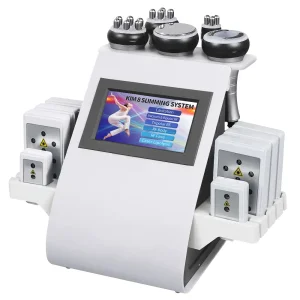
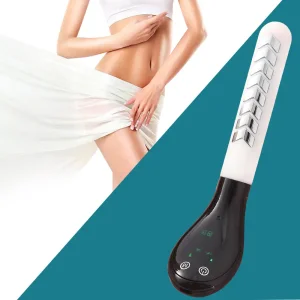
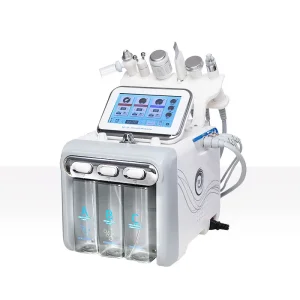
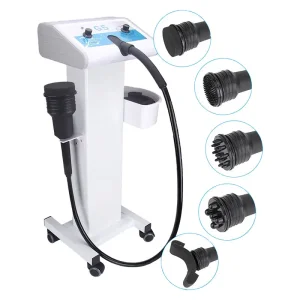
Discover our extended line of body shaping, facial rejuvenation, and specialized aesthetic equipment.
Accelerate Your Brand with CE Certified Hair Removal Technology
Contact our engineering team today to receive comprehensive product catalogs, CE test reports, OEM customization quotes, and bulk procurement price brackets.