CE Certification Facial Machine For Salon Suppliers & Manufacturers
The Comprehensive Industrial Whitepaper & Global B2B Sourcing Guide on Multi-Technology Aesthetic Workstations, European Regulatory Compliance, and Factory Direct Efficiency.
High-Performance Salon Facial & Body Equipment
Direct factory sourcing for international distributors, medical aesthetic chains, and professional spa equipment suppliers.
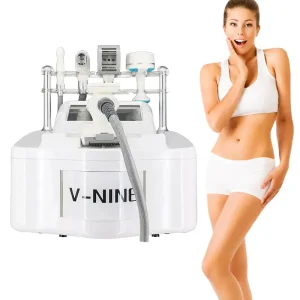
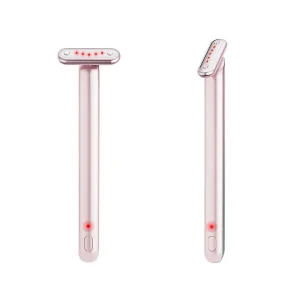
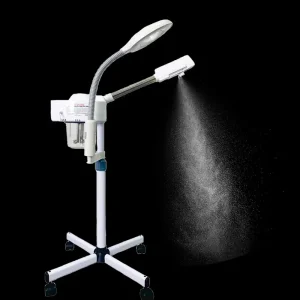
Global Market Evolution & Commercial Landscape of Salon Facial Machines
An in-depth analysis of technological integration, market dynamics, and regulatory compliance standards shaping modern aesthetic procurement.
1. The Shift Toward Multi-Modality Hydro-Facial Systems
The global commercial beauty sector is undergoing a rapid transition from single-function aesthetic devices to unified, multi-modality platforms. Modern medical spas and high-end salons demand versatile facial systems capable of performing complete, step-by-step skin rejuvenation protocols in a single session. This evolution is driven by consumer desire for immediate, visible outcomes with zero post-treatment downtime.
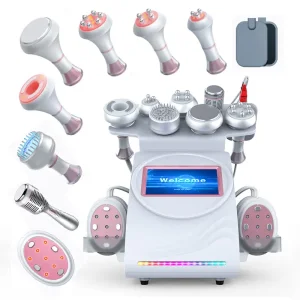
Core technological convergence within contemporary CE Certification Facial Machines typically integrates six to fourteen synergy-driven handpieces, including:
- Hydrodermabrasion & Vacuum Extraction: Utilizing localized vacuum vortex tip technology to exfoliate dead micro-stratum corneum while infusing specialized serum solutions.
- Bipolar & Multipolar Radiofrequency (RF): Delivering thermal energy deep into the dermal collagen network (55°C – 65°C) to stimulate neocollagenesis and tissue contraction.
- High-Frequency Electroporation & Microcurrent: Temporarily altering cell membrane permeability to maximize transdermal nutrient delivery while restoring facial muscle tone.
- Ultrasonic Skin Scrubbing & Phonophoresis: Operating at 28kHz to 3MHz for deep pore descaling and sonic infusion of active macromolecules.
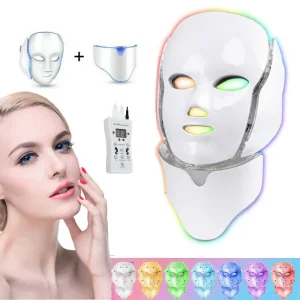
- Photodynamic Therapy (PDT) LED Arrays: Employing narrow-band light spectrums (Red 630nm, Blue 415nm, Green 525nm) to target target acne bacteria and hyperpigmentation.
2. Deciphering European CE Compliance: CE-MDD vs. CE-MDR Requirements
For B2B buyers, distributors, and salon equipment suppliers importing into the European Economic Area (EEA), regulatory certification is not merely a marketing asset—it is a strict legal prerequisite. A thorough understanding of CE certification framework separates compliant importers from those exposed to heavy customs impoundments and legal liabilities.
Under current European Commission directives, non-invasive facial devices fall under two major legal pathways depending on their clinical classification and energy output:
| Compliance Standard | Directive / Regulation | Target Application | Verification Requirements |
|---|---|---|---|
| LVD (Low Voltage Directive) | 2014/35/EU | Electrical Safety (50V–1000V AC) | Insulation testing, ground continuity, thermal resistance (IEC 60335-1). |
| EMC Directive | 2014/30/EU | Electromagnetic Compatibility | RF emission suppression, immunity against power surges and static interference. |
| Medical CE (CE-MDR) | Regulation (EU) 2017/745 | Class IIa / IIb Energy Devices | Clinical evaluation reports, Notified Body (NB) audit, ISO 13485 QMS certification. |
| RoHS 2.0 Directive | 2011/65/EU & (EU) 2015/863 | Environmental Hazardous Substances | Strict limitation of Lead, Cadmium, Mercury, and Hexavalent Chromium in components. |
Leading OEM/ODM manufacturers in China work alongside accredited international testing houses (TÜV Rheinland, SGS, Intertek) to ensure that technical construction files (TCF) meet every clause of these standards, providing distributors with frictionless customs authorization and market entrance.
The Shenzhen Supply Chain Advantage & Factory Production Efficiency
How China’s advanced aesthetic hardware manufacturing ecosystem delivers high precision, rapid iteration, and unmatched cost-to-performance metrics.
Vertical Component Integration
By locating R&D and production facilities in Shenzhen and Guangdong industrial clusters, aesthetic manufacturers source sub-components—such as medical-grade peristaltic pumps, high-frequency ultrasonic transducers, micro-pneumatic valves, and HD touchscreens—within a 50-mile radius. This reduces component procurement lead times by up to 70% compared to Western counterparts.
ISO 13485 Quality Assurance
Modern Chinese beauty machine factories operate under strict ISO 13485 Quality Management Systems. Every facial device undergoes multi-stage automated testing: continuous 72-hour burn-in stress testing, pressure drop testing for vacuum circuits, dielectric strength testing, and precise acoustic output power calibration prior to export packaging.
Turnkey OEM & ODM Customization
Factory direct partnerships enable complete custom branding workflows. Suppliers can request customized ABS injection-molded casings, tailored GUI software interfaces in multi-language formats, custom-engraved handpiece logos, and specialized packaging boxes designed to elevate brand authority in local retail markets.
B2B Supplier Insight: Total Cost of Ownership (TCO)
Sourcing directly from an ISO 13485 certified Chinese manufacturer reduces unit acquisition costs by 45% to 65% compared to purchasing from European or American brand re-packagers. This financial margin provides salon suppliers with structural pricing flexibility to offer extended warranties, localized training, and competitive profit margins to end-user spa clients.
Localized Application Scenarios & Treatment ROI Breakdown
Analyzing treatment protocols, operational costs, and client yield across diverse commercial aesthetic business models.
Primary Commercial Placement Environments
Medical Spas & Dermatology Clinics
Used for pre-treatment skin prep before ablative laser sessions, post-surgical lymphatic drainage, deep sebum extraction, and non-invasive facial contouring packages.
High-End Day Spas & Wellness Centers
Forms the core of signature anti-aging treatments, hydra-facial memberships, oxygen jet peels, and wedding-day radiance skin protocols.
Beauty Salon Chains & Franchises
Enables standard treatment protocols across multiple branch locations with simple operator training requirements and high client retention rates.
Financial Revenue Projection Model for Salon Owners
Below is a standardized economic projection demonstrating payback periods for a commercial multi-function facial machine:
| Treatment Protocol | Avg. Session Charge | Consumable & Power Cost | Gross Margin per Client | Break-Even Timeline (Device Purchase) |
|---|---|---|---|---|
| Hydrodermabrasion & Extraction (45 min) | $120.00 | $4.50 (Serum + Tip) | $115.50 (96.2%) | approx. 25–30 Clients |
| RF Skin Tightening & Lifting (60 min) | $160.00 | $3.00 (Coupling Gel) | $157.00 (98.1%) | approx. 18–22 Clients |
| PDT LED Anti-Acne Therapy (30 min) | $85.00 | $1.20 (Sheet Mask) | $83.80 (98.5%) | approx. 35–40 Clients |
| Signature 8-in-1 Deluxe Facial (90 min) | $250.00 | $8.00 (Combined Fluids) | $242.00 (96.8%) | approx. 12–15 Clients |
Emerging Technology Trends in Aesthetic Facial Machinery
Key technological shifts redefining the next generation of professional beauty salon equipment over the coming decade.
1. Smart AI Skin Diagnostics & Cloud Sync
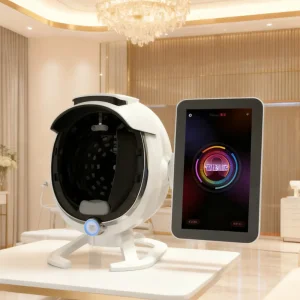
Modern facial platforms increasingly incorporate multi-spectral AI camera handpieces (RGB, UV, PL lighting). These analyzers map epidermal moisture levels, pore congestion, deep melanin accumulation, and vascular redness. Algorithmic software auto-suggests optimal treatment intensity settings and serum choices for the aesthetic technician.
2. Precise Frequency Modulation & Sensor Feedback
Advanced RF and microcurrent systems now features real-time skin impedance monitoring. By measuring tissue resistance 1,000 times per second, the machine dynamically adjusts output current, preventing epidermal overheating while maintaining maximum therapeutic thermal energy in the target dermal layer.
3. Ergonomic Modular Handpiece Architectures
To minimize technician wrist fatigue during continuous back-to-back appointments, modern handpiece design utilizes ultra-light composite polymers and quick-connect magnetic interfaces. Plug-and-play handpiece sockets allow rapid modular servicing without dismantling the primary power supply.
4. Sustainable Eco-Friendly Consumable Systems
Leading manufacturers are replacing single-use plastic treatment tips with autoclavable medical grade silicone tips or biodegradable polymer alternatives, aligning commercial salon operations with global sustainability guidelines.
Factory Verification & Procurement Quality Audit Protocol
A structured audit framework for international importers to evaluate beauty machine manufacturers before committing to volume contracts.
Step-by-Step Supplier Evaluation Checklist
- CE Certificate Authenticity Verification: Cross-check the certificate issuance number with the official online database of the issuing Notified Body (e.g., TÜV, SGS). Ensure the certificate explicitly covers electrical safety (LVD) and electromagnetic radiation (EMC).
- Factory Quality Management Inspection (ISO 13485): Request a live virtual factory audit or third-party inspection (SGS/Bureau Veritas) to verify incoming component inspection (IQC), in-line assembly quality control (IPQC), and final outbound checks (OQC).
- Internal Component Quality Assessment: Demand internal chassis photography. Professional-grade machines must feature organized wiring harnesses, solid isolation transformers, industrial grade power supplies (Mean Well or equivalent), and separate fluidic tubing loops isolated from electrical motherboards.
- Warranty SLA & Spare Parts Support: Ensure the factory contract mandates guaranteed spare parts availability for a minimum of 5 years, along with clear protocols for air-shipping replacement PCB boards or handpiece modules within 48 hours of diagnostic verification.
Frequently Asked Questions (FAQ) for Global Buyers
Expert answers addressing regulatory, technical, and commercial questions regarding CE-certified salon facial equipment.
What specific test reports are included with your CE Certification for facial machines?
Can the software interface and machine housing be customized with our brand identity?
What electrical voltage configurations are supported for international export?
How do hydrodermabrasion vacuum systems prevent internal liquid backflow damage?
What is the minimum order quantity (MOQ) and production lead time for wholesale buyers?
What warranty coverage and technical after-sales support do you provide?
How do multi-polar radiofrequency (RF) handles prevent client skin scalding?
Are replacement consumables, serums, and tips readily available for reorder?
Advanced Body Contouring & Facial Diagnostics Range
Expand your clinic or salon product offerings with our full portfolio of CE-certified aesthetic solutions.