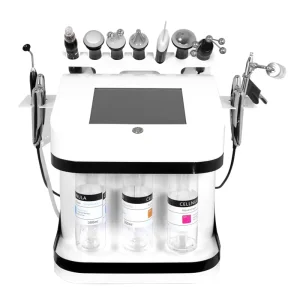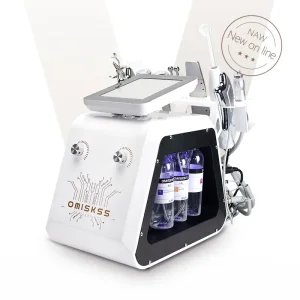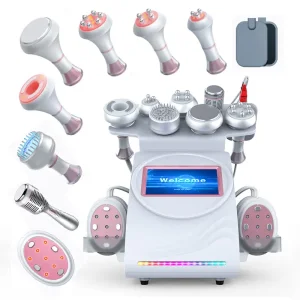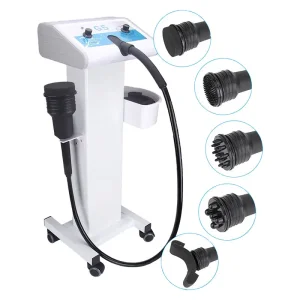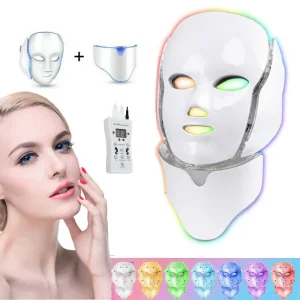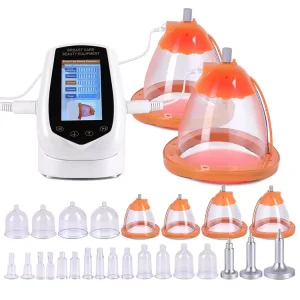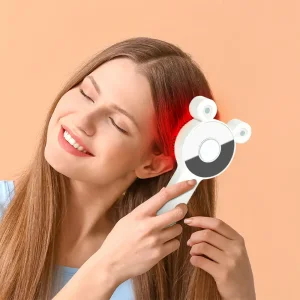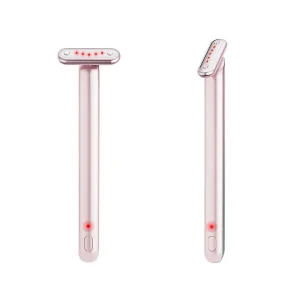
Featured Professional Aesthetic & LED Light Therapy Equipment
Direct-from-factory medical and salon-grade optical systems engineered for international distributors, dermatological clinics, and wellness chains.
Executive Summary: Navigating Global Sourcing for Skin Phototherapy
The global market for advanced light-emitting diode (LED) phototherapy devices has undergone a radical paradigm shift. Once categorized strictly as complementary wellness accessories, medical-grade LED photobiomodulation (PBM) platforms are now foundational equipment in clinical dermatology, plastic surgery recovery suites, luxury aesthetic spas, and consumer device portfolios.
For international distributors, aesthetic equipment brand managers, and medical procurement officers seeking to buy LED therapy for skin from exporters and factories, identifying a manufacturing partner with true optoelectronic technical depth is paramount. The competitive landscape requires hardware that delivers precise optical spectral power distributions, validated irradiance levels ($mW/cm^2$), zero therapeutic decay, and comprehensive international regulatory compliance.
Sourcing directly from specialized Chinese OEM/ODM manufacturing hubs—specifically Shenzhen and Guangdong's high-tech industrial corridors—offers unprecedented advantages. Enterprise buyers gain access to advanced surface-mount technology (SMT) automation, rapid prototype iterations, scale economics, and customized firmware architecture tailored to regional market mandates.
The Physics & Photobiological Architecture of Professional LED Devices
To evaluate LED skin therapy hardware effectively, enterprise buyers must look beyond cosmetic housing design to analyze optical physics and cellular interactions. Clinical efficacy in photodynamic therapy (PDT) and photobiomodulation is governed by three primary variables: Wavelength Precision ($\lambda$), Irradiance ($mW/cm^2$), and Fluence ($J/cm^2$).
Targeted Wavelength Engineering
High-performance factories utilize medical-grade semiconductor chips emitting narrowband light with a tight tolerance ($\pm 3nm$). Key therapeutic bands include:
- 415nm Blue Light: Targets Cutibacterium acnes porphyrins, inducing singlet oxygen production for microbial destruction.
- 633nm Red Light: Stimulates Cytochrome c Oxidase within mitochondrial electron transport chains, boosting ATP synthesis.
- 830nm Near-Infrared (NIR): Deep tissue penetration reaching dermal fibroblasts, promoting type I/III collagen synthesis and microcirculation.
- 590nm Yellow Light: Accelerates lymphatic drainage and reduces post-laser edema and erythema.
Optical Irradiance & Beam Divergence
Therapeutic efficacy fails if irradiance falls below cellular activation thresholds. Modern factory designs integrate optical primary lenses (30° to 60° beam angles) over SMT diode arrays to prevent optical dispersion. This ensures uniform energy density across large treatment surfaces without hot-spotting or thermal injury.
Thermal Management & Driver Stability
LED junction temperature directly affects wavelength drift and output power decay. Leading Chinese exporters utilize aluminum metal-core PCBs (MCPCB) combined with silent pulse-width modulation (PWM) cooling fans. Solid-state constant-current driver boards guarantee zero flicker and stable power delivery during back-to-back clinical treatments.
| Parameter / Metric | Commercial Grade (Consumer/Retail) | Clinical Grade (Saloons & Spas) | Medical Grade (Dermatology/Hospital) |
|---|---|---|---|
| Target Irradiance | 15 – 35 mW/cm² | 45 – 75 mW/cm² | 80 – 120+ mW/cm² |
| Wavelength Variance | ± 15 nm (Broadband) | ± 5 nm (Narrowband) | ± 2 to 3 nm (High-Purity) |
| Diode Type | DIP LED / Standard SMT | High-Power SMT 3528 / 5050 | Medical High-Output Matrix Chips |
| Cooling System | Passive Plastic Heatsink | Aluminum MCPCB + Passive Air | Active Thermal Management & Fans |
| Regulatory Standards | CE-EMC, FCC, RoHS | CE-Medical MDR, ISO 13485 | FDA 510(k), CE MDR Class IIa/b |
Why Source From China? Supply Chain Advantages & Manufacturing Scale
China has evolved into the world's undisputed nexus for optoelectronic beauty tech manufacturing. Navigating Chinese factory networks allows international enterprise clients to bridge the gap between complex engineering requirements and commercially viable product margins.
End-to-End Vertical Ecosystem
From wafer fabrication and chip packaging to industrial housing mold production and software engineering, China's hardware ecosystem (centered in Shenzhen and Dongguan) minimizes component lead times. Supply chain proximity enables rapid prototyping cycles, reducing time-to-market by up to 60% compared to Western assembly lines.
Unmatched Cost-to-Performance Ratio
Automated SMT pick-and-place machinery and scaled manufacturing output allow tier-1 factories to deliver high-irradiance phototherapy equipment at competitive wholesale price points. This allows brand buyers to command healthy gross margins while offering end-users premium-grade aesthetic devices.
Rigorous Quality Assurance & Burn-In Protocols
Established exporters implement strict Quality Management Systems (QMS). Prior to dispatch, professional LED devices undergo continuous 72-hour burn-in testing, optical spectroradiometer wavelength verification, drop tests, and high-voltage electrical safety checks to ensure zero dead diodes upon client arrival.
Enterprise Sourcing Strategies: OEM, ODM & Custom Engineering
Global distributors and medical equipment brand owners require tailored procurement frameworks. A standard off-the-shelf product is rarely sufficient to build long-term brand equity in competitive international markets. Leading exporters offer comprehensive OEM/ODM engineering services:
Industrial Design & Custom Molds
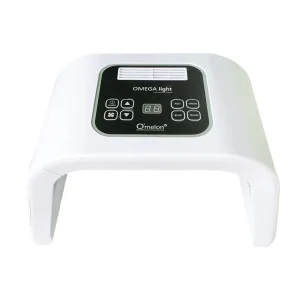
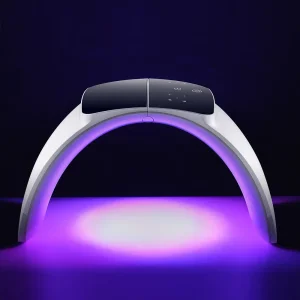
Factories provide bespoke housing engineering—from flexible food-grade liquid silicone masks for ergonomic facial contouring to rigid freestanding arch-type PDT systems with motorized articulated arms for clinical settings. Custom colorways, metallic finishes, and private-label logo integration are standard options.
Custom Firmware & UI/UX Localization
Touchscreen interfaces on professional LED consoles can be programmed with multilingual options, custom treatment presets (e.g., Post-Op Recovery, Acne Control, Anti-Aging), variable frequency pulsing protocols (1 Hz to 110 Hz), and custom branded startup screens.
Flexible Business Models & Lead Times
Reliable exporters support scaling businesses with structured minimum order quantities (MOQs). Initial sample evaluation runs (1–5 units) transition seamlessly into mass production orders (500+ units) supported by standard 15 to 25-day production lead times and FOB/DDP shipping logistics.
Localization Support & International Compliance Frameworks
Exporting optical medical hardware requires strict adherence to international regulatory safety standards. Non-compliant machinery risks customs seizures, operational liability, and brand reputation damage. When buying LED skin therapy hardware, enterprise importers must audit factory compliance documentation.
Medical Regulatory Certifications
Leading factories maintain ISO 13485 Quality Management Systems for medical devices. Specific product lines hold CE Medical MDR (EU 2017/745) certifications, FDA 510(k) clearances for acne and wrinkle reduction, and CB Scheme test reports.
Electrical & Photobiological Safety
Devices must comply with IEC/EN 60601-1 (General Requirements for Basic Safety and Essential Performance) and IEC 62471 (Photobiological Safety of Lamps and Lamp Systems), guaranteeing blue light risk levels fall strictly within Risk Group 0 or 1 (Exempt/Low Risk).
Localized Documentation & Support
Turnkey exporting includes region-specific power cords (UL, UKCA, VDE, SAA), localized user instruction manuals, clinical treatment guides, marketing asset packs, and compliance technical files (TCF) for seamless customs clearance.
Diverse Commercial Applications & Market Deployment
Professional LED skin therapy equipment serves a broad spectrum of commercial environments. Understanding localized use cases allows procurement managers to select the appropriate form factor and power output for their target client base.
1. Medical Dermatology & Plastic Surgery Clinics
Primary Devices: High-power arch PDT consoles, multi-panel standing light beds.
Application: Used for pre-op skin conditioning, accelerated post-surgical healing (flaps, facelifts, blepharoplasty), reducing downtime after fractional CO2 laser resurfacing, and photodynamic therapy protocols for actinic keratosis.
2. Luxury Aesthetic Spas & Wellness Resorts
Primary Devices: 7-Color LED facial tunnels, microdermabrasion + LED combo stations.
Application: Integrated as express anti-aging add-on services or signature relaxation facials. Non-invasive light therapy provides instant radiant skin without downtime, driving high profit margins per treatment hour.
3. Specialized Acne Treatment Centers
Primary Devices: Target-pulsed Blue (415nm) + Red (633nm) dual-wave systems.
Application: Drug-free treatment routines for adolescent and adult inflammatory acne vulgaris. Offers a non-pharmaceutical alternative for patients seeking natural dermatological recovery.
4. Direct-to-Consumer (DTC) & Home-Use Beauty Brands
Primary Devices: Flexible wearable silicone LED masks, handheld LED/EMS wands.
Application: Private-labeled wearable devices designed for daily home maintenance. Light weight, rechargeable lithium-ion battery integration, and intuitive one-touch control make these top-sellers for skincare e-commerce brands.
Emerging Technology Trends Reshaping the LED Therapy Sector
Staying competitive in the aesthetic device market requires early adoption of next-generation hardware innovations. Chinese research and development centers are pioneering several technological breakthroughs:
AI Skin Diagnostics Integration
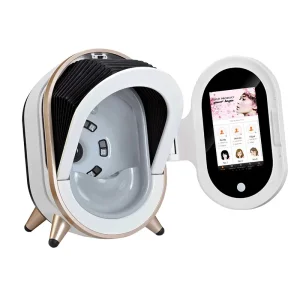
Next-gen LED consoles integrate high-definition 3D diagnostic cameras powered by artificial intelligence. The system analyzes sebum levels, pore density, pigment depth, and wrinkle metrics, automatically generating a customized multi-wavelength phototherapy exposure program tailored to the patient's real-time skin condition.
Multi-Wavelength Synchronized Pulsing
Moving beyond single-color static emission, modern systems utilize dynamic frequency pulsing (e.g., 10Hz to 100Hz) combined with simultaneous Red/NIR/Yellow light emission. Synchronized pulsing prevents cellular accommodation, maximizing mitochondrial absorption while keeping skin temperatures cool.
Smart IoT & Clinic Fleet Management
Enterprise medical consoles now incorporate cloud connectivity (IoT). Clinic owners and franchise operations can remotely monitor lamp usage hours, track operator performance, perform over-the-air (OTA) firmware updates, and manage maintenance cycles across multiple clinic locations worldwide.
Frequently Asked Questions (FAQ) for Enterprise Buyers
Answers to common questions from distributors, procurement directors, and brand managers sourcing LED skin therapy machinery from China factories.
Complete Aesthetic Equipment Series & Factory Catalog
Explore our extended line of multi-technology skin treatment machines, body sculpting platforms, and personal care electronics.