
Top-Tier Laser & Medical Beauty Hardware
Factory-direct aesthetic workstations engineered for clinical safety, high energy density output, and prolonged continuous operation.
The Commercial & Industrial Landscape of Medical Laser Removal Systems
An authoritative analysis of market growth, supply chain evolution, and laser wavelength innovation driving medical aesthetic procurement worldwide.
Clinical Chain Demand Dynamics
Global medical spas, dermatology clinics, and plastic surgery centers are rapidly shifting away from legacy flashlamp IPL to high-power semiconductor Diode (808nm/755nm/1064nm) and ultra-short pulse Picosecond Nd:YAG lasers. The primary operational catalyst is patient throughput—modern laser architectures deliver higher fluence at sub-30ms pulse durations, cutting treatment times by up to 60%.
Upstream Semiconductor Integration
The performance of any laser removal system hinges on semiconductor bar manufacturing. Premier OEMs partner with gold-standard emitter providers (such as Coherent Inc. USA or Jenoptik Germany) to integrate GaAs micro-channel cooling bars. This eliminates thermal degradation, guaranteeing stable spectral output across millions of high-energy shots.
B2B Procurement Realities
Procurement officers must evaluate vendors beyond initial capital expenditure (CAPEX). Key ROI metrics include applicator handpiece replacement costs, micro-channel cooling integrity, TEC refrigeration performance, and duty-cycle limits. Factory-direct suppliers offering end-to-end modular component replacement significantly reduce total operational overhead (OPEX).
Selective Photothermolysis & Laser Wavelength Engineering
Understanding the biological and physical mechanisms that govern hair removal, tattoo destruction, and vascular lesion therapy.
The Golden Rule of Laser Removal Physics
To achieve non-invasive follicular or pigment destruction without surrounding epidermal damage, the laser energy pulse duration (tpulse) must be equal to or shorter than the Thermal Relaxation Time (TRT) of the target chromophore (melanin or ink particle): tpulse ≤ TRTtarget. Concurrently, the energy fluence (measured in J/cm²) must exceed the damage threshold of the germinal matrix cells.
| Laser Wavelength | Primary Target Chromophore | Optimal Fitzpatrick Skin Type | Clinical Penetration Depth | Key Applications |
|---|---|---|---|---|
| 755 nm Alexandrite / Diode | High Melanin Absorption | Types I – III (Fair Skin) | Superficial to Mid-Dermis | Fine hair, thin follicle removal, solar lentigines |
| 808 nm Gold Standard Diode | Balanced Melanin & Water | Types I – V (Universal) | Deep Dermis (Bulge & Bulb) | Standard laser hair removal, high repetition density |
| 1064 nm Nd:YAG / Diode | Low Melanin / High Hemoglobin | Types IV – VI (Dark / Tanned Skin) | Deepest Subcutaneous Layer | Dark skin hair removal, vascular lesions, deep tattoo ink |
| 532 nm / 1064 nm Picosecond | Exogenous Tattoo Pigment | All Skin Types (Targeted) | Photo-Acoustic Shockwave Depth | Tattoo removal, recalcitrant hyperpigmentation, melasma |
Diode Laser Thermal Management: Micro-channel vs Macro-channel
The single leading point of failure in commercial laser removal equipment is thermal degradation of the laser diode stack. Premium B2B suppliers build machines utilizing micro-channel copper heatsinks featuring sub-millimeter fluid channels directly beneath the emitter bars. Combined with closed-loop Compressor Refrigeration and TEC (Thermoelectric Cooling) sapphire contact plates, treatment heads maintain a constant 0°C to -5°C tip temperature, delivering pain-free epilation and preventing epidermic burns.
Pulse Duration Dynamics: Milliseconds vs. Picoseconds
Hair follicle thermolysis requires millisecond-domain pulses (10ms to 100ms) to allow thermal diffusion throughout the hair shaft down to the stem cell region. Conversely, tattoo removal relies on photo-acoustic shattering requiring picosecond (10-12s) or nanosecond (10-9s) delivery. Picosecond lasers generate extreme peak power that shatters ink particles into microscopic dust without generating conductive heat that causes scarring.
Regional Regulatory Frameworks & Clinical Scenarios
Ensuring your aesthetic device deployment meets worldwide medical safety standards and localized operational requirements.
North America (FDA / ANSI)
Importers into the US market require FDA 510(k) clearance (Class II medical device classification) or FDA registration for aesthetic light-based platforms. Systems must comply with ANSI Z136.3 standards for laser safety in healthcare facilities, including interlock safety switches and optical protective eyewear parameters.
European Union (CE MDR)
Under the EU Medical Device Regulation (MDR 2017/745), aesthetic laser devices fall under Annex XVI stringent controls. Procurement requires CE 2797 certification, EN 60601-1 electrical safety validation, and EN 60601-2-22 specific requirements for laser equipment.
Middle East (SFDA / MoH)
Saudi Arabia (SFDA) and UAE (MoHAP) mandate medical device registration with Arabic user interfaces, high-capacity tropicalized cooling radiators designed for 45°C ambient temperatures, and dual-voltage power transformers (110V/220V wide range).
Asia-Pacific (TGA / NMPA)
Australia’s TGA standards emphasize laser safety classification (Class 4 lasers) and strict skin-typing protocols. Systems configured with multi-wavelength switching (755/808/1064nm) are favored due to diverse demographic skin phototypes.
Laser Removal Machine Procurement Selection Matrix
A rigorous evaluation matrix for clinic owners, equipment distributors, and OEM buyers comparing technical configurations.
| Evaluation Parameter | Standard / Commercial Grade | Medical High-End Grade | OEM Customization Capability |
|---|---|---|---|
| Laser Source & Bar Origin | Domestic Standard Bars (10-12 Bars) | Coherent (USA) / Jenoptik (Germany) 16-24 Bars | Custom Bar Count & Wattage (600W to 2400W) |
| Cooling System Architecture | Standard Radiator + Fan Air Cooling | TEC Peltier + Industrial Water Compressor + Sapphire | Dual Tank / High-Flow Italian Water Pumps |
| Spot Size & Applicator Tips | Fixed Spot (12 x 12 mm) | Interchangeable Magnetic Tips (15x15, 15x25, 15x35mm + 8mm Nose) | Custom Shell Molding, Ergonomic Handle Styling |
| Handpiece Lifetime Output | 10 Million to 20 Million Shots | 50 Million to 100 Million Shots | Integrated Shot Counter with Smart RFID Lock |
| Control Interface & Software | 8-inch Android Touchscreen | 15.6-inch 4K HD Smart Android Screen with Cloud Telemetry | Private Label UI Logo, Multilingual Support (16+ Languages) |
Total Cost of Ownership (TCO) Calculation
When calculating TCO for a laser removal machine, factor in: Initial Acquisition Cost + Freight & Tariffs + Annual Handpiece Refurbishment + Water Filter Replacement Cycle (every 6 months) + Electrical Consumption. A high-efficiency diode machine with 100M shots reduces cost per treatment shot to less than $0.0001 USD.
Modular Maintenance Architecture
Leading manufacturers design machines with modular plug-and-play internal sub-assemblies: independent power supply units for the laser diode vs cooling pump, self-sealing quick-connect water valves, and localized error diagnostic code software. This allows remote troubleshooting and component replacement without returning the entire machine to the factory.
OEM / ODM Customization Services
For brand owners and regional distributors, suppliers provide complete OEM services: customized ABS plastic chassis injection molding, metallic electroplated trim colors, custom boot-screen animations, client database integration, and specialized optical filter coatings.
Buy Laser Removal Machine: Supplier & Service FAQ
Expert technical and commercial answers for purchasing managers, aesthetic distributors, and clinical directors.
What key technical parameters determine the quality of a commercial diode laser removal machine?
1) Laser Power Output (Wattage): Professional systems should offer 1200W to 2400W pure optical laser handpiece power for effective thermal destruction of deep hair follicles.
2) Laser Diode Bar Origin: USA Coherent or German Jenoptik bars deliver higher energy stability and longer lifespan compared to unbranded emitters.
3) Cooling Capacity: A combination of TEC (Thermoelectric Cooling) + Industrial Compressor ensures the sapphire head stays below 0°C during continuous 12-hour clinic operations.
4) Pulse Width Range: Ultra-short pulse width (down to 10ms-30ms) delivers high energy without scorching dark skin phototypes.
What is the difference between Single Wavelength (808nm) and Triple Wavelength (755nm / 808nm / 1064nm) laser systems?
How does the warranty and spare parts service work for international B2B purchases?
What OEM / ODM customization services can suppliers provide for distributor brand building?
• Custom injection-molded housing and casing colors.
• Screen printing of distributor logo on the machine body and handpiece.
• Customized Android user interface (UI) software featuring your company logo, color palette, and language selection.
• Pre-configured treatment parameter presets tailored to regional regulatory requirements.
• Custom flight-case packaging and user manual printing.
Why is water quality critical to laser removal machine maintenance and longevity?
What is the average lead time, shipping method, and customs documentation provided by China suppliers?
Explore Our Full Range of Factory-Direct Devices
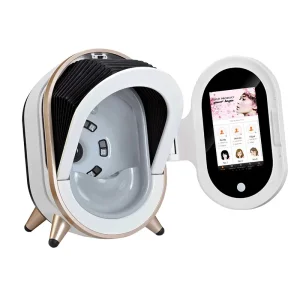
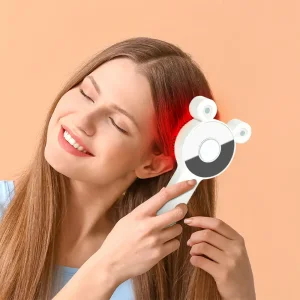
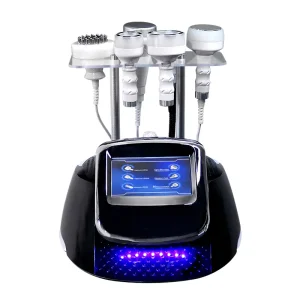
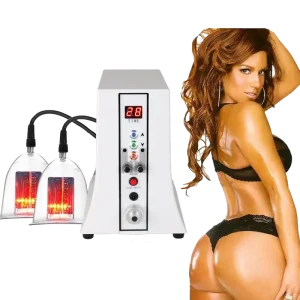
From body contouring systems to facial management platforms—expand your clinic's service capability.
Partner with a Leading Laser Machine Manufacturer Today
Whether you are expanding a chain of aesthetic clinics or seeking a reliable OEM supplier for private-label laser equipment, our engineering team is ready to support your business goals.