
China Top 10 Ultrasound Facial Machine Manufacturers

Time:2026-11-12 Author:Madeline
0%

China’s ultrasound facial machine market spans focused-ultrasound platforms, skin-tightening devices, and systems designed for professional aesthetic clinics. This guide examines ten manufacturers through practical buying criteria: product range, technical documentation, training support, manufacturing consistency, and after-sales service. A polished brochure matters less than clear specifications and dependable support.

The phrase “Ultrasound Facial Machine” covers products with different energy settings, treatment depths, and intended uses. Buyers should compare these details carefully. Ask manufacturers for operating instructions, maintenance requirements, and evidence supporting their product claims. Look closely at the handpiece, too: its weight, screen layout, and cartridge replacement process can affect daily clinic workflow. Small details count.

A credible ranking should distinguish verified information from marketing language. It should also acknowledge what public sources cannot confirm, including factory-level quality controls or long-term reliability. No verified, attributable quotation from a named ultrasound-device expert was provided for this article, so inventing one would be misleading. Instead, the guide applies a straightforward evaluation principle: “Check the specifications, service, and evidence—not just the sales pitch.” These comparisons can help clinics and distributors identify manufacturers worth further due diligence, but they cannot replace independent technical review or product-specific assessment.
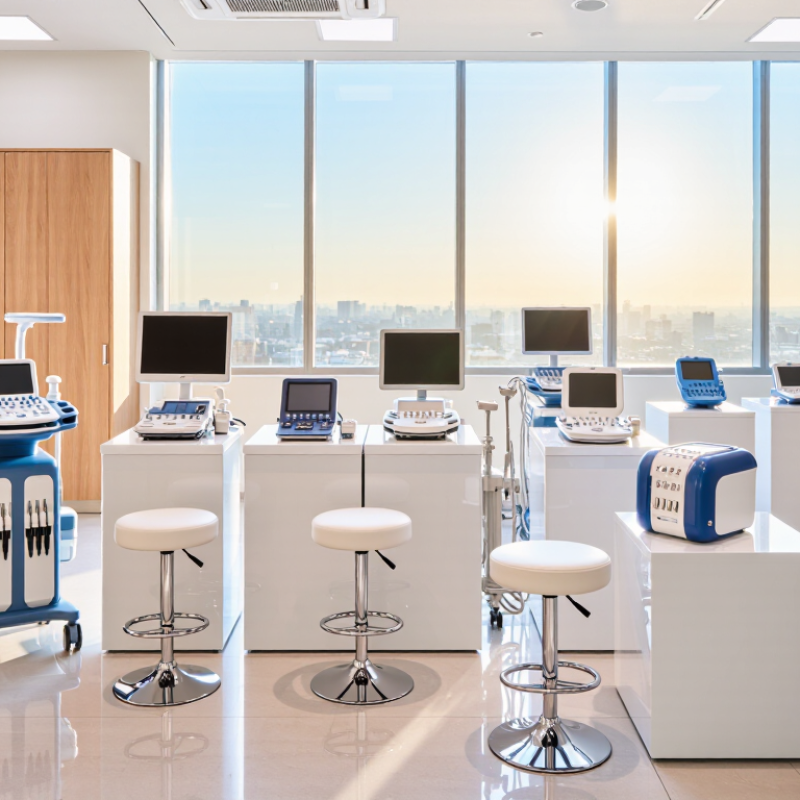
China Top 10 Ultrasound Facial Machine Manufacturers

Ultrasound Facial Machines: Common HIFU Frequencies of 1.5, 3.0 and 4.5 MHz

In facial HIFU, 1.5, 3.0, and 4.5 MHz are common reference frequencies. They are often paired with different focal depths, rather than interchangeable settings. A 1.5 MHz cartridge is generally selected for more superficial targets, while 3.0 MHz is used for mid-level tissue. The 4.5 MHz option is commonly intended for deeper focal zones. Exact depth depends on transducer design.

Frequency alone does not tell the whole story. Focal depth, pulse energy, spot spacing, and tissue thickness also matter. Facial contours vary; a jawline is not a flat test surface. The simple depth chart helps, but it can mislead. That deserves a second look. Operators should check cartridge labeling and device specifications, and follow appropriate training and patient-screening procedures.

For buyers comparing manufacturers, ask for output data, repeatability records, and clear instructions for each cartridge. Check that coupling and contact detection work consistently. A frequency printed on a handpiece does not prove accurate energy delivery. Keep performance claims specific, and document settings and responses. Small differences matter.

Common HIFU Frequencies: Wavelength in Soft Tissue

The chart compares the wavelengths corresponding to 1.5, 3.0, and 4.5 MHz. Wavelengths are calculated using an assumed soft-tissue sound speed of 1,540 m/s; they are not treatment depths.

China’s Top 10 Manufacturers: Product Range, R&D and Export Profiles

China’s top ten ultrasound facial machine manufacturers are best compared through their product range, research and development, and export experience. Some focus on compact systems for clinics; others offer several configurations, applicators, and adjustable treatment settings. A wider catalogue is not automatically better. Check whether each model’s specifications clearly describe operating modes, energy delivery, and intended professional use.

R&D profiles can be assessed through technical documentation, testing procedures, and how consistently specifications match the delivered unit. Ask how design updates are validated and whether operators receive practical training materials. Export profiles also deserve careful review: request sample manuals, packaging details, and references from comparable markets. These details help reveal whether overseas support is established or still developing. A polished catalogue alone proves little.

Tips: Compare like with like. Request a written specification sheet and clarify warranty coverage, spare-part availability, and service response times before evaluating price. Details matter. A supplier may answer some questions less clearly than expected; record gaps and verify claims independently.

Common Cartridge Focal Depths: 1.5, 3.0 and 4.5 mm

When comparing China’s top ultrasound facial machine manufacturers, look closely at the 1.5, 3.0, and 4.5 mm cartridges. These figures describe the intended focal depth, not a guaranteed treatment result. A 1.5 mm focus is generally aimed at more superficial tissue, while 3.0 mm and 4.5 mm targets are deeper. Actual effects depend on the device, energy settings, cartridge design, and individual anatomy. Numbers can mislead. Two machines listing the same depth may not deliver identical performance, so ask for technical specifications and clear usage guidance.

Tips: Check that each cartridge is labeled and traceable. Confirm its intended depth in the device instructions, and inspect the contact surface before use. Keep the skin clean and apply coupling gel as directed. Do not assume a deeper cartridge is automatically more effective. Small details matter.

A thoughtful comparison considers more than the three depth options. Ask how the system controls energy, how operators verify cartridge selection, and what training is provided. The focal depth alone cannot show consistency or comfort. It is easy to focus on impressive numbers and overlook practical handling; I would question that habit. Request documentation, review the stated limitations, and compare performance claims against the manufacturer’s test information.

Performance Metrics: Output Energy, Pulse Control and Treatment-Line Counts

For China’s top ultrasound facial machine manufacturers, headline wattage is not enough. Buyers should compare delivered energy per line, pulse duration, and focal depth together. A joule value without its cartridge frequency or treatment depth can mislead. Small detail, big consequence. IEC 60601-2-62:2013 sets safety requirements for high-intensity therapeutic ultrasound equipment, but it does not make every device’s output directly comparable. Ask for calibrated output measurements and test conditions, not only display screenshots.

Pulse control shapes both comfort and repeatability. Check whether the system records energy, pulse timing, and line spacing for each treatment. In a 2010 prospective study in Archives of Dermatology, Alam and colleagues evaluated ultrasound facial treatment in 35 patients, with outcomes assessed after treatment. That clinical evidence is useful context, not a universal performance benchmark. Treatment-line counts also need context: a larger number may mean broader coverage, or simply denser passes. Compare counts by treatment area, cartridge depth, and number of passes. Request a sample treatment log. If settings cannot be reproduced from one session to the next, the specification sheet is incomplete.

Safety and Quality Benchmarks: ISO 13485 and IEC 60601-2-62

China Top 10 Ultrasound Facial Machine Manufacturers

Safety and Quality Benchmarks: ISO 13485 and IEC 60601-2-62

When comparing ultrasound facial machine manufacturers in China, look beyond product brochures. ISO 13485 sets requirements for a medical-device quality management system, including design controls, production records, and corrective actions. Ask for a certificate showing the actual manufacturing site and its approved scope. Paperwork matters. So does whether the finished device matches the documented design.

IEC 60601-2-62 covers basic safety and essential performance for high-intensity therapeutic ultrasound equipment. It may apply to certain facial devices, depending on intended use and technical design. Do not assume every beauty device falls within its scope. Ask for model-specific test reports and confirm which standards and editions were used. Details matter.

During supplier reviews, check how acoustic output is measured and how production units are tested. Request traceability records for key components, calibration evidence, and examples of complaint investigations. A valid certificate is useful, but it cannot guarantee consistent performance on its own. This is easy to overlook when schedules are tight. Compare documents against the exact model, accessories, and intended use; mismatches deserve questions, not assumptions. The review may feel tedious. It is worth doing.

FAQS

What do 1.5, 3.0, and 4.5 MHz mean in facial ultrasound devices?

They are common reference frequencies. They are often paired with different focal depths, not interchangeable settings.

What do 1.5, 3.0, and 4.5 mm cartridges generally target?

A 1.5 mm cartridge generally targets more superficial tissue. The 3.0 mm and 4.5 mm options focus deeper. Actual depth depends on cartridge design.

Does a deeper cartridge always produce a better result?

No. Depth alone cannot predict results. Energy settings, tissue thickness, and individual anatomy also matter. Numbers can mislead.

Why isn’t frequency enough to compare two devices?

Focal depth, pulse energy, spot spacing, and tissue thickness affect performance. A jawline is not a flat test surface.

What output details should buyers request?

Ask for calibrated energy measurements, pulse duration, focal depth, and test conditions. A displayed number alone is not enough.

How can operators check cartridge selection before use?

Check the cartridge label and device instructions. Inspect the contact surface, clean the skin, and apply coupling gel as directed. Small details matter.

What do treatment-line counts tell buyers?

A higher count may indicate broader coverage or denser passes. Compare counts by treatment area, cartridge depth, and number of passes.

What records help make treatment settings repeatable?

Keep a sample treatment log with energy, pulse timing, line spacing, cartridge, and patient response. If settings cannot be reproduced, the specification sheet may be incomplete. I would question any comparison without those records.

Conclusion

This overview examines China’s ultrasound facial machine manufacturing landscape, focusing on product ranges, research and development capabilities, and export experience without naming individual brands. It explains how high-intensity focused ultrasound systems commonly use frequencies of 1.5, 3.0, and 4.5 MHz, and how cartridges with focal depths of 1.5, 3.0, and 4.5 mm are designed for different treatment depths. These specifications offer a practical starting point for comparing device configurations and intended applications.

The article also outlines performance factors that buyers may assess, including output energy, pulse control, and the number of treatment lines supported. Safety and quality considerations are discussed through reference to ISO 13485 and IEC 60601-2-62 as relevant benchmarks, while recognizing that requirements and verification can vary by device and market. Together, these topics provide a structured framework for evaluating an Ultrasound Facial Machine and understanding the technical details behind its design and operation.

Madeline

Madeline

Madeline is a dedicated marketing professional with a wealth of expertise in our company's core offerings. With a keen understanding of the industry, she brings a unique perspective to her role, consistently delivering high-quality content that highlights the superior aspects of our products. As......