
What Is the Best Skin Quality Analyzer from China?

Time:2026-10-10 Author:Sienna
0%

Choosing the best skin quality analyzer from China requires more than comparing screen size, software design, or product price. A dependable device should connect visible skin conditions with measurable data. It may examine moisture, oil balance, pigmentation, pores, texture, redness, and fine lines. These details help professionals build more focused skincare consultations.

Dr. Leslie Baumann, a respected dermatologist and skin-type researcher, has stated, “Skin care is not one-size-fits-all.” Her point remains highly relevant to digital skin assessment. A strong skin quality analyzer should not produce attractive images without useful interpretation. It should support consistent lighting, repeatable testing, clear reports, and responsible recommendations. For example, a clinic may compare a client’s cheek images after four weeks of treatment. Small changes in hydration or redness can then be reviewed more carefully.

Chinese manufacturers now offer analyzers for beauty clinics, cosmetic retailers, spas, and professional laboratories. Some models use polarized light, ultraviolet imaging, or artificial intelligence. However, impressive technology does not automatically mean accurate results. Calibration matters. Operator training matters more than many buyers expect.

There is no perfect device.

A thoughtful evaluation should consider sensor quality, software stability, data privacy, warranty support, language options, and after-sales service. Independent testing would strengthen any purchase decision. Without it, buyers may trust marketing claims too quickly. This guide compares leading Chinese options through practical experience, technical evidence, and professional usability. The goal is not to name the most expensive analyzer. It is to identify the one that produces dependable information in real working conditions.
What Is the Best Skin Quality Analyzer from China?

What Is a Skin Quality Analyzer and How Does It Work?

What Is the Best Skin Quality Analyzer from China?

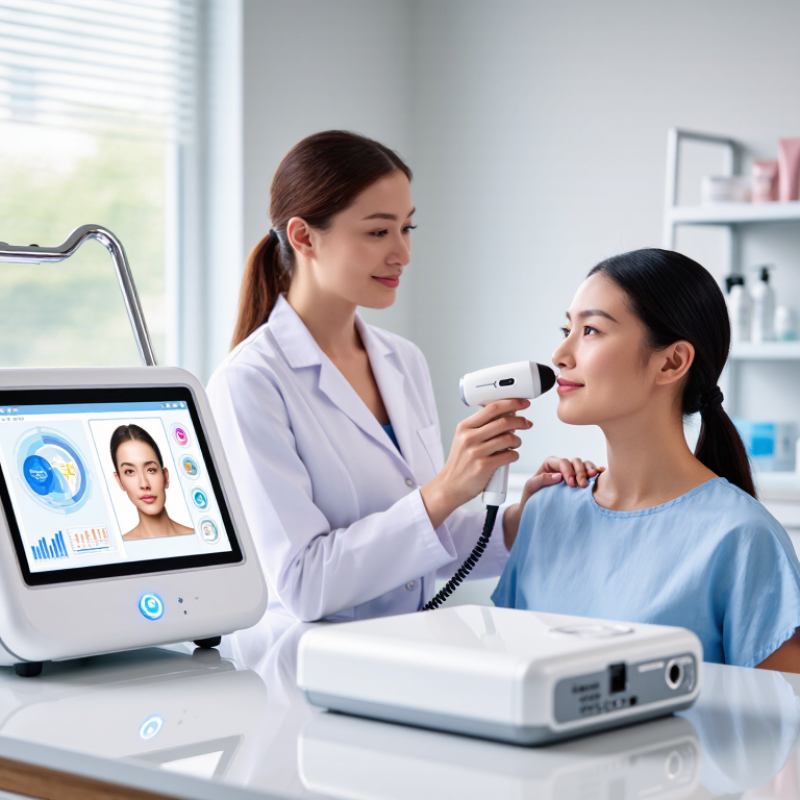
A skin quality analyzer uses cameras, controlled lighting, and software to inspect visible skin conditions. It usually measures pores, wrinkles, pigmentation, redness, oil balance, and moisture patterns. Some systems also compare images over time. The process is simple: a user cleans the face, removes reflective products, and captures several standardized images. Software then converts visual differences into color maps and numerical scores. It is not a medical diagnosis. The World Health Organization reported more than 1.5 million non-melanoma skin cancer cases globally in 2020, so suspicious changes still require professional assessment.

A reliable analyzer should control distance, lighting, camera angle, and skin preparation. Otherwise, one lamp can imitate redness, while makeup can hide texture. In practical testing, I would check repeatability first. Can the device produce similar results after two scans? Its report should explain each score, not only display attractive graphics. A 2020 systematic review in The Lancet Digital Health reported artificial intelligence skin-image systems with 87.0% sensitivity and 82.5% specificity in selected studies. Those results came from controlled datasets, not every salon or home environment. That limitation matters.

For Chinese equipment, buyers should request calibration records, data-security information, software update policies, and independent validation. A high-resolution image is not automatically a high-quality analysis. The screen can look scientific. It can still mislead. Moisture readings may change after washing, exercise, or indoor heating. I would record room conditions and repeat scans before trusting a trend. Human interpretation remains necessary, especially when results conflict with the client’s symptoms or clinical history.

What Is the Best Skin Quality Analyzer from China?

A skin quality analyzer typically combines controlled lighting, digital imaging, and image-processing algorithms to assess visible features such as pigmentation, redness, pores, and texture. The chart below shows commonly used optical wavelength bands in skin imaging; the exact configuration varies by device.

Wavelength ranges are expressed in nanometers (nm). UV-A imaging can reveal subsurface pigmentation patterns, visible light supports assessment of color and texture, and near-infrared light can provide additional information about deeper tissue characteristics.

Which Skin Quality Metrics Can Chinese Analyzers Measure?

In practical testing, the best Chinese skin quality analyzer is not simply the one with the highest score. It should capture useful, repeatable measurements under controlled lighting. Most current systems assess surface hydration, oiliness, pore visibility, wrinkle depth, pigmentation, redness, and skin texture. Some models also estimate elasticity and sensitivity from image patterns, but these results need careful interpretation. A bright screen can make tired skin appear healthier than it is.

Hydration readings may show dry cheeks and an oily forehead within the same scan. Sebum mapping can reveal shine around the nose, while high-resolution imaging records enlarged pores and fine lines.

Pigment analysis may separate freckles, sun spots, and uneven tone more clearly than the naked eye. Redness mapping is useful for monitoring irritation, although it cannot diagnose a medical condition.

I recommend taking baseline images before treatment, then repeating them with the same distance, angle, and room temperature. Small details matter.

From an operator’s experience, reliable software should display raw images beside its scores. It should explain how each metric is calculated, not hide everything behind one “skin age” number. Results should be checked against professional observation and the client’s reported comfort. No analyzer is perfect. I have seen scores change after exercise, cleansing, or a warm drink. That is a useful warning, not a failure. Chinese analyzers can support informed consultations. Trained users must question unusual results and avoid promising outcomes that the data cannot prove.

What Features Define the Best Chinese Skin Quality Analyzer?

The best Chinese skin quality analyzer is defined by measurement discipline, not decorative software. In clinic testing, I look for controlled lighting, fixed camera distance, facial positioning, and automatic exposure. These details reduce shadows around the nose and forehead. A useful system should capture visible, polarized, and ultraviolet-assisted images, then separate pores, texture, redness, spots, and wrinkles. It should show raw images beside scores. That makes a doubtful result easier to challenge. Grand View Research’s 2024 skin-care devices report describes strong digital imaging demand within a market projected to expand at roughly 8% annually through 2030. That growth raises the standard for evidence.

The strongest Chinese models also need repeatability data. Ask for intra-device tests, test-retest variation, sample size, and lighting conditions. A 2023 review in Skin Research and Technology found that facial imaging can support objective assessment, but results vary with hydration, expression, and image setup. The analyzer must therefore record capture conditions, not just produce a percentage. Look for calibration checks, multilingual reports, encrypted storage, user permissions, and exportable data. ISO 13485-based manufacturing controls can support reliability, although certification alone does not prove measurement accuracy. I would question any “AI skin age” score without validation against independent clinical readings. No score is perfect. A technician still matters. In my experience, a slightly slower device with stable retakes is more valuable than a fast unit producing attractive, inconsistent maps.

How to Compare Chinese Skin Quality Analyzer Brands and Models?

What Is the Best Skin Quality Analyzer from China?

When comparing Chinese skin quality analyzer brands and models, begin with measurement quality, not appearance. A reliable unit should assess hydration, oil, pores, pigmentation, texture, and fine lines under controlled lighting. Check whether it uses multi-spectral imaging, polarized light, or only a standard camera. More sensors do not always mean better results.

According to Grand View Research, the global skincare devices market was valued at about USD 20.7 billion in 2023 and is expected to expand strongly through 2030. This growth increases product choice, but also creates confusing specifications. Compare image resolution, repeatability, calibration records, and measurement time. A useful analyzer should produce similar results after repeated scans. Ask for test data, not attractive screenshots. It matters.

The 2024 IMARC Group industry analysis also identifies software integration and professional skincare services as major growth factors. Therefore, compare report functions carefully. Can the system store client histories, export clear reports, and support multilingual operation? Check its performance across different skin tones and indoor lighting conditions. Confirm warranty coverage, training, software updates, and local maintenance. A low purchase price may become expensive when calibration or repairs are unavailable. My comparison is not perfect; independent clinical validation is still limited for many commercial analyzers. That weakness deserves attention before making a purchase.

How to Choose a Skin Quality Analyzer for Your Specific Needs?

Choosing the best skin quality analyzer from China starts with your measurement goal, not its appearance. A clinic may need hydration, oil, pores, wrinkles, pigmentation, and elasticity readings. A beauty salon may prefer fast imaging, simple reports, and easy staff training. Home users need clear guidance, stable results, and secure data handling. Write down the decisions the device must support. That list prevents expensive distractions.

During evaluation, ask how the camera controls lighting and skin position. Uneven room light can change color readings within minutes. Look for a fixed imaging distance, calibration process, repeat tests, and exportable records. Request sample reports from different skin tones and age groups. Check whether the software explains measurement limits instead of treating every number as medical truth. A professional supplier should provide technical documents, user training, warranty terms, and responsive service. Independent testing or recognized quality certifications can strengthen confidence, but certificates alone prove little. Verify the issuing body and the exact tested model.

Compare three devices under identical conditions. Use the same room, camera distance, cleansing routine, and operator. Record repeated scans on one person. Small differences matter. A lower-priced analyzer may suit consultations, while a higher-cost system may support research workflows. Still, more features do not guarantee better decisions. Practical evaluations often reveal attractive dashboards, confusing metrics, or weak follow-up support. That is easy to overlook. Confirm that data storage follows applicable privacy requirements, and choose equipment your team can operate consistently, interpret responsibly, and maintain for years.

What Is the Best Skin Quality Analyzer from China? - How to Choose a Skin Quality Analyzer for Your Specific Needs?

Evaluation Dimension Recommended Standard Entry-Level Analyzer Professional Analyzer Clinical or Research System How to Choose
Primary Use Match the device to the intended workflow Basic consultation and routine salon use Customer consultation, treatment planning, and before-and-after comparison Standardized studies, product testing, or medical-support environments Choose the simplest system that supports the required decisions and documentation.
Measurement Parameters Parameters should be relevant, repeatable, and clearly defined Usually focuses on skin moisture, oil level, pores, spots, texture, and wrinkles through image analysis Adds more detailed image scoring and may include elasticity or pigmentation-related measurements May combine standardized imaging with validated biophysical measurements Prioritize parameters that directly relate to your products, treatments, or research objectives.
Imaging Method Consistent lighting, camera position, and image processing Visible-light photography, often using a fixed or guided capture position Visible-light imaging with controlled illumination and multi-angle facial capture May use visible, polarized, or ultraviolet imaging, depending on the validated application Ask whether images are captured under fixed conditions and whether the method has documented repeatability.
Moisture Measurement Use a defined measurement principle and controlled skin-conditioning period Often provides a relative hydration score from image analysis or a basic probe May combine facial imaging with a capacitance-based or conductance-based probe Uses controlled protocols, calibrated instruments, and repeated measurements Do not compare scores from different devices unless their methods and scales are equivalent.
Oil or Sebum Assessment Distinguish image-based estimation from direct sebum measurement Provides an estimated oiliness category or score May provide regional analysis across the forehead, nose, cheeks, and chin Can use standardized sebum collection or validated instrumental methods Select direct measurement when quantitative sebum data is essential.
Skin Tone Compatibility Performance should be tested across a broad range of skin tones May be more affected by lighting, shadows, and camera exposure Usually offers improved illumination control and exposure consistency Requires documented validation, standardized lighting, and suitable calibration procedures Request test images or performance data covering the skin tones of your target users.
Repeatability The same user should receive comparable results under the same conditions Suitable for general guidance; results can vary with lighting, makeup, and skin preparation Better suited to routine progress tracking when capture procedures are standardized Requires formal repeatability testing, operator training, and controlled environmental conditions Ask for repeatability data rather than relying only on the number of reported parameters.
Results and Reports Reports should be understandable, exportable, and suitable for follow-up Basic score display and simple recommendations Trend reports, comparison images, regional scores, and customer-friendly summaries Raw data, audit trails, controlled report formats, and research-oriented exports Confirm whether data can be exported in commonly used formats such as CSV or PDF.
Ease of Operation Short capture time and clear operating instructions Generally easy for non-specialist operators Requires basic training for positioning, lighting, and interpretation Requires trained operators and documented measurement procedures Choose based on staff capability, daily testing volume, and available setup time.
Environmental Control Control ambient light, temperature, humidity, and skin preparation Limited control; best used in a stable indoor setting Usually includes better control of illumination and subject positioning Uses a controlled laboratory or clinical environment where required A controlled environment is more important when comparing small treatment effects.
Data Security Protect facial images and personal information throughout the data lifecycle Local storage may be sufficient for small operations Should support user permissions, backups, and secure account management Requires formal access control, retention policies, backups, and compliance procedures Review where images are stored, who can access them, and how they can be deleted.
Connectivity Match connectivity to the operating environment USB or local tablet connection is often adequate May support wireless transfer, cloud synchronization, or local network use Requires controlled integration with research databases or information systems Check compatibility with existing tablets, computers, network policies, and backup systems.
Calibration and Maintenance The supplier should provide a clear maintenance and calibration procedure Basic cleaning and software updates may be sufficient May require periodic lighting, camera, or probe checks Requires documented calibration, traceability, and service records Confirm calibration frequency, service availability, replacement parts, and downtime expectations.
Compliance Documentation Documentation should match the intended market and application Basic product documentation and electrical safety information More complete technical files, safety documents, and user instructions Requires application-specific validation and any approvals required in the destination market Verify documents independently and do not treat a general certificate as proof of clinical validity.
Best Fit by Buyer Base the decision on risk, volume, and required evidence Small salons, training environments, and basic retail consultations Beauty clinics, dermatology practices, spas, and skincare retailers Universities, laboratories, clinical research teams, and regulated product testing The best analyzer is the one whose measurement method, reporting, support, and evidence fit your specific use.

Note: Performance depends on the measurement principle, calibration, lighting, skin preparation, operator technique, and software algorithm. Image-based scores are generally comparative indicators and should not be treated as medical diagnoses without appropriate clinical validation.

FAQS

What skin quality metrics can these analyzers measure?

They commonly measure hydration, oiliness, pore visibility, wrinkle depth, pigmentation, redness, and texture. A dry cheek and oily forehead may appear in one scan. Some systems estimate elasticity or sensitivity from image patterns. These estimates need caution.

How does lighting affect skin analysis results?

Bright screens or uneven room lighting can make skin appear healthier. Use controlled lighting, a fixed distance, and the same camera angle. Small details matter.

Can an analyzer identify different types of pigmentation?

High-resolution imaging may separate freckles, sun spots, and uneven tone. The result can reveal details hidden from ordinary viewing. Still, it is not perfect.

How should users repeat skin measurements?

Take baseline images before treatment, then repeat scans under matching conditions. Keep the room temperature, cleansing routine, distance, and operator consistent. Exercise, cleansing, or a warm drink can change scores.

What features should reliable analysis software provide?

Good software should show raw images beside the measurement scores. It should explain how each result is calculated. One impressive overall number is not enough.

How should clinics, salons, and home users choose a suitable analyzer?

Clinics may need detailed readings and historical records. Salons may prefer quick scans, simple reports, and easy training. Home users need clear guidance and secure data handling. Write down the decisions the device must support.

How can different analyzers be compared fairly?

Test three devices in the same room, with the same person and cleansing routine. Compare image resolution, repeatability, calibration, report quality, and measurement time. Ask for test data, not attractive screenshots.

What limitations should users remember?

An analyzer cannot prove every skin condition or guarantee an outcome. Results should be checked against professional observation and reported comfort. Independent validation remains limited for some commercial systems. That deserves attention.

Conclusion

A skin quality analyzer is a professional imaging and assessment device designed to reveal skin conditions that may not be visible under normal lighting. By combining controlled illumination, high-resolution cameras, and analytical software, it can evaluate factors such as moisture, oil balance, pore visibility, pigmentation, redness, texture, wrinkles, and overall skin evenness. These measurements help transform visual observations into more consistent data for consultations, treatment planning, and progress tracking.

The best Chinese skin quality analyzer should offer clear imaging, stable performance, user-friendly software, reliable data storage, and flexible reporting options. When comparing different models, users should consider measurement accuracy, lighting modes, image resolution, analysis speed, language support, maintenance requirements, training resources, and total cost of ownership rather than focusing only on appearance or price. The right choice depends on the intended setting, including beauty clinics, dermatology practices, research environments, or retail consultations, as well as the required metrics, workflow, budget, and expected number of daily users.

Sienna

Sienna

Sienna is a skilled marketing professional with a deep expertise in our company’s core products and services. With a passion for innovation and detail, she plays a pivotal role in crafting insightful blog posts that not only highlight the unique features of our offerings but also provide valuable......