
Choosing the best Body Contouring Equipment in 2026 is not a simple brand comparison. The right choice depends on the treatment area, patient goals, clinical evidence, operator training, and realistic expectations. Some platforms use cryolipolysis; others use radiofrequency, focused ultrasound, or electromagnetic energy. They do not work in the same way. Nor do they suit every patient.
Demand provides useful context, but it does not prove that one device is superior. The American Society of Plastic Surgeons’ 2023 Procedural Statistics Report recorded 347,782 liposuction procedures in the United States. Liposuction is surgical, not a noninvasive device treatment. Still, the figure shows why patients and clinics need clear comparisons across treatment options. A procedure count is not an equipment ranking. Keep that distinction in view.
For a clinical perspective, plastic surgeon and researcher Dr. Jeffrey Kenkel has published on liposuction and body-contouring outcomes. A practical takeaway from his work is that device choice should follow patient anatomy and treatment goals, not marketing claims. That is a useful standard. It also leaves room for uncertainty: results vary, and published evidence differs across technologies. This guide compares treatment mechanisms, evidence quality, safety considerations, and practical clinic needs. Look for details such as applicator size, treatment time, maintenance demands, and the evidence behind advertised results. The best fit is the one supported by credible data and careful patient selection—not simply the newest machine.
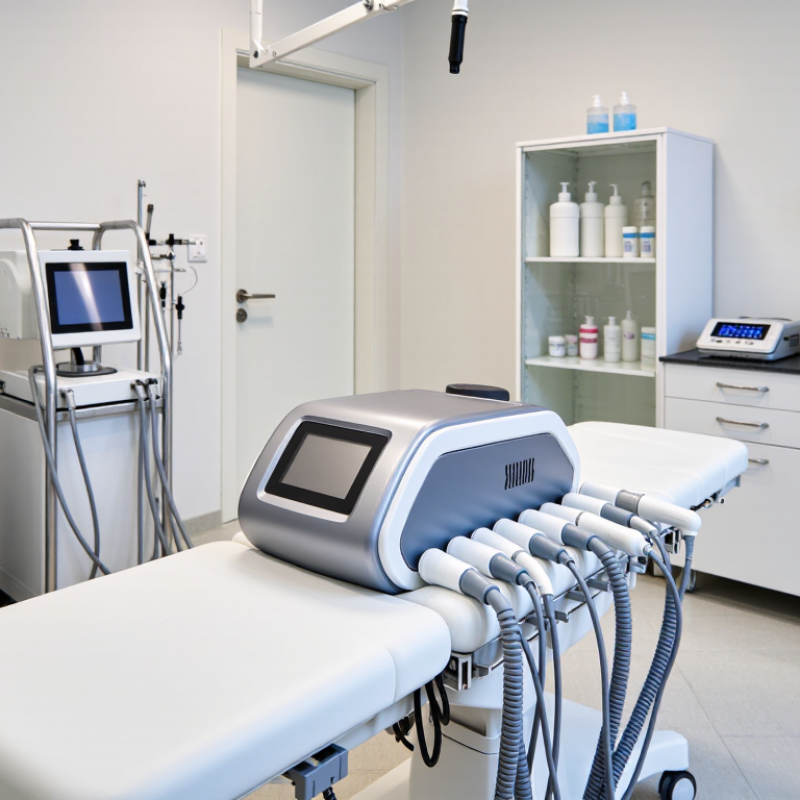
Body contouring equipment is designed to address specific concerns, such as localized fat, skin laxity, or uneven texture. It is not a substitute for weight management, and different technologies do not produce the same effects. Cooling-based systems target selected fat deposits, while radiofrequency devices heat tissue and may support skin tightening. Ultrasound systems use acoustic energy in defined treatment areas. The right choice depends on the goal, body area, health history, and a qualified provider’s assessment. One device cannot do everything.
Tips: Ask what tissue the treatment targets, how many sessions are typical, and what changes are realistic. Share relevant medical history before treatment. Clear answers matter.
Treatment scope should be specific. For example, a small, pinchable area may suit a different approach than loose skin across the abdomen. A careful provider should explain expected discomfort, possible side effects, and when results may appear. Results vary, and maintenance may be needed. Sometimes the best recommendation is to wait or choose another option. That can feel disappointing. Still, a realistic plan is more useful than a dramatic promise. Check that the equipment and treatment fit your needs, rather than choosing by the device name alone.
How to read this chart: A filled bar indicates a treatment goal commonly associated with that modality; it does not show how effective a treatment is. Cryolipolysis and focused ultrasound are commonly used for localized fat reduction; radiofrequency may be used for fat reduction, skin tightening, or improving the appearance of cellulite; electromagnetic muscle stimulation targets muscle strengthening. Uses vary by device and protocol. These treatments are not weight-loss methods, and results vary.
In 2026, body-contouring equipment spans several distinct technologies. Cryolipolysis cools localized fat; radiofrequency delivers heat to tissue and may support skin tightening. Focused ultrasound targets selected fat layers, while electromagnetic stimulation induces repeated muscle contractions. Low-level light devices offer another noninvasive approach, though results and treatment protocols vary. These methods are not interchangeable. The American Society of Plastic Surgeons’ 2023 Procedural Statistics report recorded 347,782 liposuction procedures in the United States. That figure is a useful reality check: noninvasive equipment is not a substitute for surgery when substantial fat removal is the goal.
Choosing a device starts with the concern being treated: a small, pinchable fat bulge, mild skin laxity, or muscle definition. Patient selection, operator training, device settings, and realistic expectations all affect outcomes. Ask about published clinical evidence for the exact technology and treatment area, not just broad claims about a category. The categories overlap; marketing language can blur distinctions. That deserves scrutiny.
Tips: Match the treatment to the goal, and review medical history and contraindications with a qualified clinician. Request clear information about expected changes, risks, discomfort, and the number of sessions. Take consistent baseline photos. Small details matter.
Choosing body-contouring equipment means comparing measurable results, possible harms, and recovery—not just before-and-after photos. The ISAPS 2023 Global Survey counted about 19.1 million nonsurgical aesthetic procedures worldwide, across many treatment types. That figure shows broad demand, not proof that any particular device works. Ask for independent studies on the exact technology, treatment area, and patient group. Fat reduction is not weight loss, and outcomes vary.
Cryolipolysis, radiofrequency, and focused ultrasound use different mechanisms, so their results and risks are not interchangeable. Ask how outcomes were measured, how many sessions were typical, and how long follow-up lasted. Temporary redness, swelling, tenderness, or numbness may occur; burns and other complications are possible. Some risks may be uncommon but consequential.
Check who operates the device, what screening is used, and what follow-up care is available. Downtime can range from little interruption to several days of discomfort. A polished clinic estimate is not a guarantee. I would want clearer long-term comparisons before calling any option “best.”
Tips
Request written estimates for expected change, session count, downtime, and total cost. Photograph the treatment area under consistent lighting. Ask what happens if results disappoint or a complication develops. Small details matter. Don’t proceed if risks feel rushed or vague.
Which Body Contouring Equipment Is Best in 2026?
Which Equipment Best Matches Different Treatment Goals?
The best equipment depends on the concern being treated, not the trendiest technology. For small, pinchable fat deposits, cooling or focused ultrasound devices may suit clients seeking gradual contour changes. Radiofrequency devices are often selected for mild skin laxity because they heat tissue to support collagen remodeling. For muscle definition, electromagnetic stimulation may be considered. These approaches are not weight-loss treatments, and results vary with the device, treatment plan, and individual.
Industry figures offer context, not a device ranking. The American Society of Plastic Surgeons recorded 347,782 liposuction procedures in 2023, its Plastic Surgery Statistics Report notes. That demand underscores interest in fat reduction, but surgical liposuction is not equivalent to noninvasive equipment. A proper assessment should check skin quality, fat distribution, medical history, and realistic goals. Real-world results are less tidy than device brochures suggest.
Tips: Match the treatment to the main concern, then review clinical evidence for that specific device. Ask about expected changes, discomfort, downtime, and maintenance. Take consistent photos and measurements; lighting can mislead. If a clinic promises dramatic fat loss from a short session, pause and ask for evidence.
| Treatment goal | Equipment / technology | How it works | Typical fit and treatment course | What to expect | Key limitations and safety considerations |
|---|---|---|---|---|---|
| Reduce a small, pinchable pocket of fat | Controlled cooling (cryolipolysis) | Cooling is applied to a targeted area to injure some fat cells, which the body gradually clears. | May suit localized fat in areas that can be drawn into an applicator. One or more treatment cycles may be used per area, depending on the treatment plan. | Changes develop gradually over weeks to months. It is intended for localized contouring, not overall weight loss. | Possible temporary redness, swelling, bruising, tenderness, or numbness. Rarely, paradoxical adipose hyperplasia can cause treated fat to enlarge. Not appropriate for people with certain cold-related disorders; screening is important. |
| Improve the appearance of mild skin laxity | Radiofrequency (RF) skin-tightening equipment | RF energy heats tissue to stimulate a controlled thermal response; some systems also target superficial fat. | Often used for mild laxity or texture concerns. A course of multiple sessions is commonly recommended; protocols vary by device and treatment area. | Any tightening is generally gradual and may be modest. It is not a substitute for surgical skin removal when laxity is substantial. | Temporary warmth, redness, or swelling may occur. Burns and pigment changes are possible if treatment is unsuitable or poorly performed. Device-specific precautions apply, including for some implanted electronic devices. |
| Improve muscle tone or definition | High-intensity electromagnetic muscle stimulation | Electromagnetic energy induces repeated involuntary muscle contractions in the treated area. | May be considered for selected areas such as the abdomen or buttocks. Treatment is usually delivered as a series of short appointments. | May improve muscle firmness or definition in suitable candidates; it does not reliably replace exercise or produce meaningful weight loss. | Temporary muscle soreness or discomfort can occur. Suitability depends on the specific device and medical history; implanted electronic devices and some metal implants may be contraindications. |
| Address both muscle definition and localized contour | Combined electromagnetic stimulation and RF | Combines muscle contractions with RF heating in the same treatment session. | May suit people seeking changes in both muscle appearance and a localized fat layer. Treatment schedules depend on the system and treatment area. | Results vary, and the contribution of each energy type can be difficult to separate. Changes are generally limited to the treated region. | Shares the precautions of both technologies. Review device-specific contraindications, including implant-related restrictions and heat sensitivity. |
| Reduce a localized fat layer without cooling | Focused therapeutic ultrasound | Focused sound energy delivers energy at a selected depth to affect targeted tissue. | May be considered for specific localized areas when the person’s anatomy and the device’s approved treatment parameters are suitable. | Contour changes, if they occur, are gradual. It is not a method for general weight reduction. | Temporary tenderness, swelling, or bruising may occur. Treatment depth, target area, operator training, and device-specific labeling matter; results and risks are not identical across systems. |
| Seek non-invasive treatment for mild contour concerns with modest expectations | Low-level light / laser body-contouring equipment | Uses low-level light rather than surgical laser energy to affect the appearance of a treated area. | Usually involves repeated sessions. Best considered only after checking the evidence and authorized indications for the specific equipment. | Evidence for lasting fat reduction is limited and results may be subtle or temporary. It should not be presented as equivalent to surgical fat removal. | Protective eyewear and correct use are important. A clinician should review photosensitivity, medications, and device-specific safety instructions. |
| Improve the temporary appearance of cellulite or fluid-related puffiness | Mechanical massage, vacuum, or pneumatic compression equipment | Applies massage, suction, or compression to superficial tissue and fluid. | May be used in repeated sessions as an adjunct for selected concerns, rather than as a primary fat-reduction method. | Any change in smoothness or circumference may be temporary. These methods do not selectively remove fat cells. | May cause bruising, discomfort, or skin irritation. Avoid or seek medical advice with conditions such as suspected blood clots, significant vascular disease, or fragile skin. |
How to choose: Match the technology to the main goal—localized fat, mild skin laxity, muscle definition, or temporary cellulite appearance. Non-surgical body contouring is not a treatment for obesity or a replacement for diet, exercise, or surgery. Results, treatment schedules, contraindications, and regulatory authorization vary by device and jurisdiction; consult a qualified healthcare professional and check the specific device’s labeling before treatment.
The safest choice depends less on a machine’s popularity than on your health, treatment area, and expectations. The American Society of Plastic Surgeons’ 2023 procedural statistics recorded about 58,700 nonsurgical fat-reduction procedures. That shows demand, not proof that every device suits every person. Numbers help. Noninvasive contouring is not a weight-loss treatment, and results vary.
A qualified provider should review your medical history, examine the target area, and explain device-specific risks before recommending treatment. Cold-based procedures, for example, may be unsuitable for people with certain cold-sensitivity disorders. Other technologies can have different exclusions, including some implanted devices or skin conditions. The U.S. Food and Drug Administration notes that noninvasive body-contouring devices can cause complications, and some effects may be lasting. Ask what symptoms require follow-up. Not enough.
Check that the practitioner has relevant clinical training and experience with the specific technology, and ask who manages complications. Credentials and scope of practice vary by location, so verify them through the appropriate licensing authority. Request a written explanation of likely benefits, alternatives, costs, and follow-up care. A confident sales pitch is not a medical assessment. I would also ask to see the device’s patient information and discuss whether a modest result would still feel worthwhile.
No. It aims to change body contours, not overall weight. Results vary.
Cooling or focused ultrasound may be considered. Ask for evidence on the exact device and treatment area.
They are often used for mild skin laxity. The intended effect involves heating tissue to support collagen remodeling.
It may be considered for muscle definition. It is not a weight-loss treatment.
Redness, swelling, tenderness, or numbness may occur. Burns and other complications are also possible.
It can range from little interruption to several days of discomfort. Ask for a written estimate.
Review independent studies, typical session counts, follow-up duration, operator qualifications, and screening procedures. Small details matter.
Take photos under consistent lighting and record measurements. Lighting can mislead.
Ask what happens if results disappoint or a complication develops. Don’t rush. I would still want clearer long-term comparisons.
Choosing the best Body Contouring Equipment in 2026 depends on the treatment area, desired changes, personal health, and tolerance for recovery time. Available technologies may use approaches such as cooling, heat, ultrasound, or electromagnetic energy, and each has different treatment goals, expected results, risks, and downtime. These procedures are generally intended to address localized contouring concerns rather than replace healthy habits or serve as a weight-loss solution.
Before selecting a device, compare its evidence, suitability for the target area, likely number of sessions, possible side effects, and recovery requirements. The right option for one person may not suit another, so eligibility should be assessed by a qualified provider who can review medical history, explain realistic outcomes, and discuss alternatives. Careful screening and treatment by appropriately trained professionals are essential to making an informed and safety-conscious choice.
