
The 2026 beauty-device market is becoming more technical, competitive, and demanding. Global buyers now expect visible results, safer operation, and dependable after-sales support. A multifunctional facial machine must do more than combine several treatment modes in one cabinet. It should fit real workflows, local regulations, operator training, and client expectations.
The Global Wellness Institute’s 2024 Global Wellness Economy Monitor valued the global wellness economy at approximately $6.3 trillion in 2023. Its findings show strong consumer interest in preventive care, appearance, and personalized services. Meanwhile, market research from Grand View Research identifies aesthetic devices as a growing sector, supported by expanding skincare clinics and non-surgical treatments. These figures indicate opportunity, but they do not guarantee product quality. Market growth can also attract confusing claims and inconsistent equipment.
This guide examines the 2026 best Multifunctional Facial Machine for global buyers through a practical, evidence-informed lens. We will consider treatment functions, energy safety, documentation, consumables, maintenance, and training requirements. A machine may offer hydrodermabrasion, oxygen infusion, radio frequency, LED therapy, or ultrasonic functions. However, impressive specifications mean little without stable output and clear operating instructions.
Details matter. Check the handpiece connectors, water tank design, filter access, emergency stop, and voltage range. Ask for test reports, certification records, warranty terms, and replacement-part availability. Products should comply with applicable national requirements, such as electrical safety and medical-device rules where relevant.
There is no perfect machine.
Even experienced distributors can overlook service costs or operator education. Therefore, this review also acknowledges practical limitations, regional differences, and areas where further evidence is still needed. The goal is a reliable purchasing framework, not an exaggerated promise.
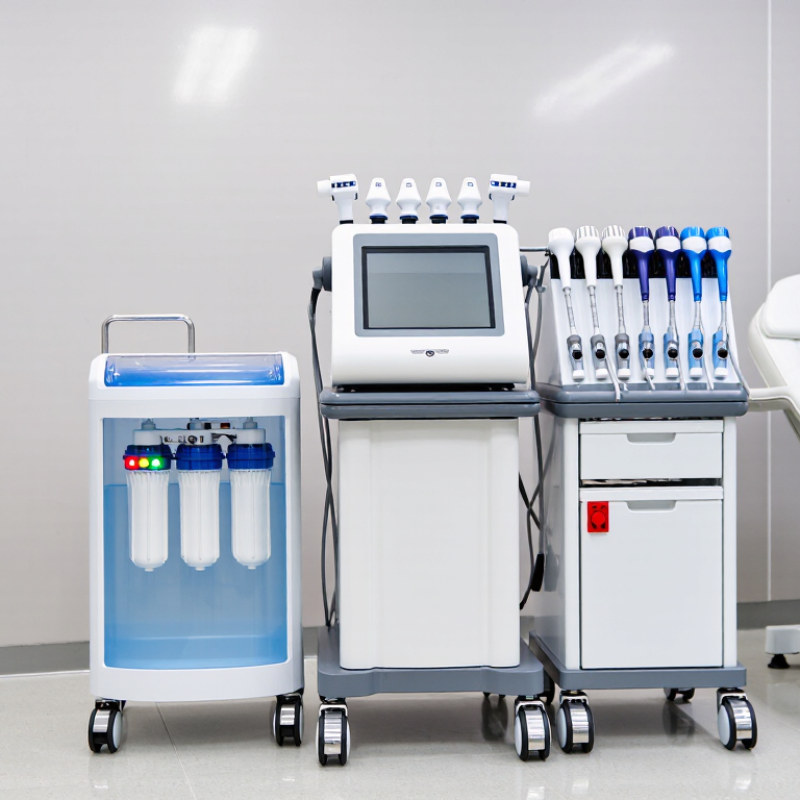
In 2026, a multifunctional facial machine means more than several handpieces on one trolley. It should combine compatible functions, such as cleansing, hydration support, skin analysis, and controlled energy delivery. Each function needs clear settings, stable output, and documented operating limits. A bright touchscreen is not enough. Practical value matters more.
Demand is growing as consumers seek visible results with limited downtime. The ISAPS Global Survey 2023 recorded about 19.5 million nonsurgical aesthetic procedures worldwide. That figure supports the need for flexible equipment in clinics and professional studios.
McKinsey’s Future of Wellness 2024 report valued the global wellness market at approximately 1.8 trillion dollars.
However, “multifunctional” can become a vague sales word. Buyers should check whether every mode has clinical evidence, user training, and safety documentation. IEC 60601-1 may apply to relevant electrical medical equipment, depending on the device and market. Local requirements still differ.
Tips: Test the machine on real workflows. Measure setup time, treatment consistency, cleaning steps, and operator comfort. Ask for output verification records, not only product brochures. Leave space for honest doubt. Some impressive features may rarely be used. A smaller system with reliable controls can be the better choice. Check disposable parts, warranty support, language options, and electrical compatibility before international purchase.
Modern multifunctional facial machines combine several technologies in one treatment platform. Common options include hydrodermabrasion, ultrasonic cleansing, radiofrequency, LED light, and oxygen infusion. Each function should have adjustable intensity, clear operating instructions, and separate safety controls. A strong system supports cleansing, hydration, gentle exfoliation, and temporary skin revitalization without promising unrealistic results.
Professional evaluation matters. Experienced operators check skin sensitivity, treatment history, and contraindications before selecting a function. For example, low ultrasonic intensity may suit delicate skin, while controlled radiofrequency can support a warming facial massage. LED treatments require suitable eye protection and correct exposure settings. Results can vary. I may prefer simple controls over excessive features, because complicated menus can increase training errors. Buyers should also verify electrical compatibility, sanitation procedures, replacement parts, user training, and regional compliance documents.
Tips: Request treatment protocols, maintenance records, and safety testing evidence before purchasing. Test the handpieces with different skin types. Ask whether consumables are easy to source locally. A practical machine should fit real salon workflows, not only look advanced in a product demonstration. Keep treatment records, including settings, client feedback, and any skin reactions. Small details matter.
For global buyers, comparing multifunctional facial machines requires more than counting treatment modes. Check the actual workflow: cleansing, hydration, radiofrequency, cooling, and light-based functions should be practical for daily use. The ISAPS Global Survey 2023 recorded 19.1 million nonsurgical aesthetic procedures worldwide, showing strong demand for flexible equipment. However, demand does not guarantee suitability. A machine designed for one climate, voltage system, or skin-care routine may perform poorly elsewhere.
Compare measurable details. Review output intensity, treatment temperature, probe materials, session time, noise, and cleaning procedures. Ask for independent test reports, electrical safety documentation, and destination-market conformity records. Fortune Business Insights reported that the global medical aesthetics market reached USD 17.07 billion in 2023, with continued growth expected through 2032. That growth can encourage exaggerated claims. I would not trust a glossy brochure alone. Published performance data is still uneven.
Tips: Build a comparison sheet before contacting suppliers. Record voltage, plug type, warranty length, spare-part access, software language, consumable cost, and staff-training requirements. Request a live demonstration using realistic treatment settings. Test handpiece weight after fifteen minutes; small discomfort becomes expensive during busy clinic hours. Also calculate total ownership cost, not only the purchase price. Import duties, maintenance, replacement probes, and local service delays can change the final result. When evidence is limited, label the uncertainty clearly instead of assuming every function delivers equal value.
A multifunctional facial machine should be judged by safety evidence, not by treatment modes. The WHO Global Atlas of Medical Devices reports more than two million medical device types worldwide. This scale makes careful verification essential. Buyers should request electrical safety testing under IEC 60601-1, where applicable, and check electromagnetic compatibility under IEC 60601-1-2. Skin-contact materials also need documented biocompatibility assessment, especially for probes, cooling plates, and conductive pads. ISO 13485 certification shows a quality management system, but it does not automatically prove every machine is safe.
Regional compliance matters. Requirements may differ between the European Union, the United States, the United Kingdom, and other markets. A responsible supplier should provide a declaration of conformity, risk-management records, test reports, labeling, and clear instructions. ISO 14971 supports medical-device risk management, while IEC 62366 addresses usability and foreseeable user mistakes. These documents should match the exact model, not a similar product. That detail is often overlooked.
Tips: Ask for serial-number traceability, inspection intervals, contraindications, and emergency shut-off instructions. Test the device with trained staff before public use. Keep treatment records and maintenance logs. Do not rely on a certificate image alone. A certificate can be genuine, yet outdated or unrelated. My practical concern is simple: multifunctional designs increase convenience, but they also create more failure points. Safe purchasing requires verification, not attractive specifications.
For global buyers, the best multifunctional facial machine is not the one with the longest feature list. Clinics, spas, and beauty professionals should match functions to treatment demand, staff skills, room size, and client expectations. The ISAPS Global Survey 2023 recorded more than 19 million nonsurgical procedures worldwide. That volume suggests strong demand, but it does not justify buying every available modality. Choose equipment with repeatable protocols, adjustable energy, clear contraindications, and treatment records. Ask for independent test reports, not polished demonstrations.
Safety and compliance require equal attention. Verify registration requirements in each target market, electrical safety documents, service coverage, and operator training. ISO 13485 certification may indicate a controlled quality system, but it does not prove clinical effectiveness. IEC 60601-1 testing is also important where applicable. Grand View Research projects a 13.9% CAGR for the global aesthetic medicine market from 2024 to 2030. Growth can encourage rushed decisions. No machine is perfect. Some multifunctional platforms sacrifice treatment depth, speed, or comfort for versatility. Request protocols, consumable costs, downtime estimates, and consistent before-and-after evidence.
Tips: Test the handpiece weight after ten minutes. Check cleaning steps between clients. Calculate cost per treatment, not purchase price alone. Ask whether local technicians can repair the system. Start with two or three high-demand functions. Expand only when utilization supports it. A small clinic may value reliability and training more than twelve touchscreen icons. Many buyers misjudge that trade-off.
Selection criteria for clinics, spas, and beauty professionals
The chart presents a practical 100-point procurement framework rather than brand or market-share data. Safety and compliance documentation receive the highest weighting, followed by treatment versatility, measurable performance, operating cost, workflow usability, and service support. Buyers should adjust the weighting according to local regulations, treatment protocols, staff expertise, and client demand.
Common functions include cleansing, gentle exfoliation, hydration, warming massage, LED treatment, and oxygen infusion. Results are temporary and can vary.
Operators should check skin sensitivity, treatment history, and contraindications before choosing a function. Begin with lower intensity when skin appears delicate.
Look for adjustable intensity, separate safety controls, clear instructions, and an emergency shut-off. Eye protection is essential during LED treatments.
Request electrical safety reports, electromagnetic compatibility testing, risk-management records, labeling, and a declaration of conformity. Documents must match the exact model.
No. It indicates a quality management system, but it does not prove every function is safe. That distinction matters.
Ask for biocompatibility evidence for probes, cooling plates, and conductive pads. Inspect materials carefully, especially when they touch sensitive skin.
Test handpieces on different skin types with trained staff. Check controls, comfort, treatment flow, and realistic operating time.
Keep treatment records, settings, client feedback, reactions, maintenance logs, and inspection dates. Check replacement parts and local consumable supplies. Small details matter.
More functions may increase convenience, but they also add failure points and training demands. I may prefer simpler controls. Fancy menus can confuse users.
In 2026, a Multifunctional Facial Machine combines several professional skincare technologies in one integrated platform, helping clinics, spas, and beauty professionals provide more efficient and personalized treatments. Common functions may include cleansing, exfoliation, hydration infusion, gentle stimulation, cooling, warming, and light-based care. The value of these systems depends not only on the number of functions, but also on treatment control, ease of operation, compatibility with different skin types, and the ability to support consistent professional results.
For global buyers, comparing machines requires careful attention to treatment performance, interchangeable accessories, maintenance requirements, training support, and long-term operating costs. Safety should be a top priority, including clear user instructions, protective features, reliable electrical design, appropriate testing, and certifications recognized in the target market. Before purchasing, clinics and spas should evaluate their customer needs, available space, staff expertise, hygiene procedures, and local regulatory requirements to select a dependable, compliant, and practical solution.
